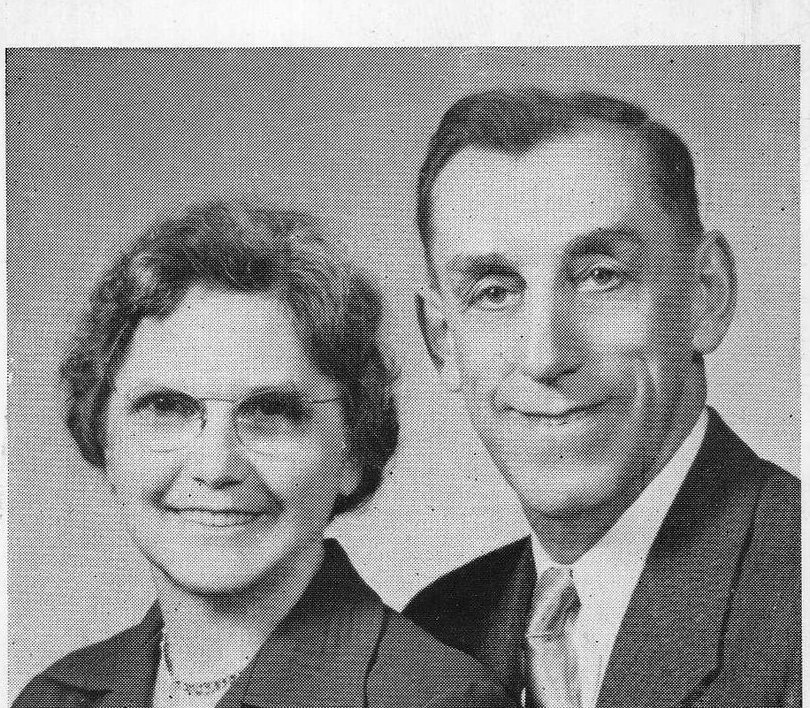
Grace Triumphant
The Triumph of God’s Grace in the Philippines
An autobiography by Cyril H. Brooks
Part Three · Chapters 19–27
© 1985 Walterick Publishers · Lord, Give Us This Mountain
Chapter 19
Post-War Religious and Political Conditions
“For a great door and effectual is opened unto me, and there are many adversaries.” (1 Cor. 16:9)
Before writing about the Lord’s work in the Philippines after World War II, it might be well to review both the political and religious background in these islands. These conditions do have a bearing on the development of the work.
When we arrived in 1922, the Philippines was a dependency of the United States. The country had its own legislature and the two most prominent Filipino leaders were Manuel Quezon and Sergio Osmena. However, the final authority was in the hands of the American governor-general. The American intention was to gradually turn over the control to the Filipinos. On our arrival, General Leonard Wood was governor-general. Being a military man he was strict in abiding by the laws and was authoritative. He was not popular with the politicians who had pretty much their own way with the previous governor-general. He had been an easy-going man and, according to reports, shared in the loot that many acquired. Naturally the Filipinos felt the process of becoming independent was too slow and that the Americans were seeking their own advantages. While there was no doubt some truth in this, American rule had brought many benefits which they had not had under the Spanish regime. One of the most prominent of these benefits was the public school education. This was signaled by the arrival of many American teachers who were known as “the Thomasites” because they arrived on the S.S. Thomas soon after American troops landed in 1898.
In 1935 the Commonwealth Government was inaugurated with Manuel Quezon as President. Being an historical event I took the boys downtown to see the inauguration ceremonies. The Presidential Palace, Malacanang, previously the official residence of the governor-general and before that of the Spanish governor, was
turned over to the Philippine President. The United States was then represented by a High Commissioner. The Commonwealth was a transitional government for ten years. During the period the tariffs would be adjusted gradually so that by the time the Philippines became a fully independent republic it would no longer be dependent upon trade with the United States.
Unfortunately, these plans were interrupted by the war in the Pacific and the invasion of the Japanese. The leaders of the Philippine government were evacuated to the United States; President Quezon later died there after a long-time illness with tuberculosis. He was succeeded by Sergio Osmena, who had the assistance of men like Carlos P. Romulo. Some of the Filipino leaders left behind joined the guerrilla movement in their continuing opposition to the Japanese. Others believed they could serve their country and people by a measure of cooperation with the Japanese. Still others were apparently opportunists who felt they could advance their own cause by collaboration with the Japanese. It was difficult to determine at times the difference between these two latter groups. Jose P. Laurel, a prominent politician, was appointed President by the Japanese when the Japanese ostensibly forestalled the American plan of granting full independence. Laurel was wounded in an assassination attempt on a golf course near our home.
President Osmena and Carlos Romulo came ashore with Gen. MacArthur in the first landing in Leyte in the fall of 1944. The Japanese were finally defeated in 1945. The following year on July 4, 1946, the Republic of the Philippines was inaugurated. In later years the date of Independence Day was changed to June 12 to conform to an earlier independence movement in 1896 during the time of the Spanish regime. It was a most difficult time for the birth of the new republic. Most of the country lay in ruins because of the bitter battles against the Japanese. One-sixth of the population had been decimated by the horrors of war. The country had been stripped by the Japanese of many of its assets. Like a Phoenix arising from its
ashes, the country made great strides but with great effort and expense.
Yet there were many problems remaining. Graft and corruption were rampant. Some of the political leaders gained great power in their own bailiwicks through their bodyguards and private armies. In Central Luzon even before World War II, there had been unrest among the farmers, most of whom were oppressed tenant farmers for absentee landlords. These warred as guerrillas against the Japanese as the Hukbalahaps or Huks which was an abbreviation for the Tagalog of “Army fighting against the Japanese.” The movement was infiltrated by Communists and to this day have continued as dissidents against the government, but more generally known now as the New People’s Army. In the south, the Moslem Moros also wanted an independent government and this antagonism of the Moros goes back even into Spanish times. In recent years they have formed the Mindanao National Liberation Front, though many of the Moros are not in favor of this organization.
In the 1950’s President Ramon Magsaysay took a firm stand against the Huks. For those who surrendered to the government, he offered land and farming utensils in virgin land in Mindanao. For those who rejected this offer, there was relentless fighting. He was very popular and was fondly called “The Guy.” Unfortunately, he died in a fatal plane crash near Cebu and his loss was keenly felt.
From 1968 to 1972, the Communists became bolder in their attacks. There was a great deal of student unrest and many demonstrations. These took on an anti-American tone as students gathered outside the U.S. Embassy. Crimes such as bank robberies and arson became common. We wondered what the outcome would be. While on furlough in 1969 (to 1970), we were questioned by Ken if we should return. As we prayed about it my thoughts turned to Revelation 3:8, “Behold, I have set before thee an open door, and no man can shut it.” LeValleys were also on furlough at the time and Jim called to ask what our plans were. I mentioned this verse as the
Lord’s leading to us and he agreed that they felt led the same way.
The folks had a celebration for us on our fiftieth wedding anniversary in September 1972. In connection with that, Hahn Browne of Far East Broadcasting Company arranged for us to be received by President Ferdinand Marcos at Malacanang. He granted us 15 minutes of his time in a very interesting interview in which Ken and Elaine and Rose shared. At that time there were many rumors of impending martial law. As we left the President’s study, Hahn asked if any decision had yet been made and was told that the matter was being studied.
The following week our mission group was greatly saddened by the death of Teddy St. Clair, the second son of Steve and Dot, who were houseparents at Faith Academy. Teddy had gone outside and had apparently fallen into a small, shallow fishpond. The funeral was held two days later from the San Juan Gospel Chapel. In the Saturday of this weekend, we got up and found that no radio station was on the air nor was our morning paper delivered. The report was that martial law had been declared radio—all radio and TV stations closed down as well as all newspapers. All airports had also been closed overnight. Ken called the U.S. Embassy to ask if they had any instructions for U.S. nationals. We were told that we could go about our usual business and not be alarmed as we waited for further developments.
We didn’t see such things as tanks rolling down the streets nor much evidence of the military. Gradually radio stations were permitted to resume operations under certain regulations. Far East Broadcasting Company was one of the first to be granted this permission. Also, papers resumed publication though obviously under censorship. The immediate outcome was the cessation of outward dissent. There was no restriction on our religious liberty nor any hindrance to our spiritual ministry. (In any case, it is not our policy to participate in political affairs.) It was undoubtedly a form of dictatorship against which the opposition rallied continually.
Martial law was lifted just prior to the Pope’s visit in early 1981.
Through all these different forms of government there has been religious liberty. Prior to World War II the Roman Catholic Church was the dominant religious force. They were in the majority and boasted that the Philippines is the only Christian nation in the Orient. Naturally they had advantages which were not shared by the Protestants who were and still are in the minority numerically. However, there have been many changes in these post-war years. There has been a greater openness to the Gospel, and these have been days of great opportunity in the work of the Lord. It may be worthwhile to consider some of the factors that have made this possible.
First, there is the factor of population growth. The population had increased six-fold during the period of Protestant missions, from about eight million at the turn of the century to over 48 million as of 1982. The population has more than doubled since World War II. There are just that many more people to be reached. Missionary effort always seems to lag behind the growth of population. It was only natural that in early days missionary work was carried on in the more accessible areas. The Bible was soon translated into the larger languages which had already been put into Roman script by the early Roman friars. In these early days there just weren’t enough missionaries to penetrate the tribal areas which were not so easily reached. The training of national missionaries was also going on at a slower pace. Since World War II, there has been more outreach into tribal areas by groups like Summer Institute of Linguistics, New Tribes Mission, and Overseas Missionary Fellowship.
A second factor in the growth of missions was an outcome of the war itself. As the liberation forces poured into this country, there were among them Christian servicemen and godly chaplains. For the first time in their island-hopping conquests, they came to a land where many could speak English. Thus, they found fellowship with Filipino Christians. As it had been in San Juan, so it was in many
places; chapels were damaged or destroyed and believers scattered. Christian G.I.’s helped to rebuild in many of the small evangelical congregations. It did not escape the attention of many communities that this voluntary help was more prevalent among Protestants than Roman Catholics. These practical demonstrations of Christian faith added prestige to what had been despised and insignificant minority groups.
Yet it also worked in another way. As the G.I.’s and chaplains worked with Filipino Christians, they were getting a first-hand experience of the missionary work. They saw the need, had a vision, and were challenged by the future possibilities. The most marked example of this is the Far Eastern Gospel Crusade, whose name is now SEND International. It was born in a servicemen’s center in Manila in September 1945, and has reached out to other lands as well. There was a time in the late 1950’s when it seemed as if the majority of new male missionaries were ex-chaplains or ex-servicemen who had been here during the war.
A factor in the progress of missions has been the change in the Roman Catholic Church in recent years. Since the time of the Second Vatican Council and days of Pope John, Protestants are no longer labeled as heretics but are viewed as “separated brethren.” In March 1937, Testaments and Gospel literature were publicly burned in a plaza in Zamboanga. In recent years, priests have had a part in preparing new Bible translations in various languages of the Philippines. The people are being encouraged to read the Bible, though at one time it was banned for the laity. On Billy Graham’s first visit to Manila some years ago, the archbishop forbade Roman Catholics to attend. On a more recent Crusade it is reported that 60% of the inquirers identified themselves as Catholics. Nowadays, a Bible verse is often seen in the obituaries of those who are evidently Roman Catholics.
In the early days of Bible School of the Air, priests and nuns forbade their students to receive our courses. In later years, we have
had requests from priests and others for Emmaus courses to help them in teaching about the Bible. There have been many Bible study groups for Catholics. The charismatic movement has had a great influence among their clergy and laity. Questions have arisen about papal authority. Chinks have appeared in the monolith! The present openness to the Gospel was unthought of a few years ago.
A fourth factor in the progress of missionary work since World War II has been the increase in the number of different missions in these years. One reason for this was the closing of the door for missionary work in China and in what was Indochina. As the missionaries were forced out of these lands they looked for other fields of service. It was our privilege to entertain in our home the first survey team of the then China Inland Mission, now Overseas Missionary Fellowship. The stay of Raymond Frame and Stephen Knight with us was a refreshing experience for us, and we were happy to share what information we had and to help in this new outreach. About the same time we enjoyed fellowship with Dick Pittman who stayed with us for a time while on a similar mission for Summer Institute of Linguistics. (In later years Dr. Richard Pittman was honored with the prestigious Magsaysay Award as representing SIL.) There were other groups too that came here because of the open door. Here was a field with religious liberty and not too much difficulty in obtaining visas.
Of course, this same freedom also provided an open door for some cults that, for us, were not so welcome. Seventh-Day Adventists had been here before the war. However, in recent years the Mormons and Jehovah’s Witnesses have been very active. There are also cults which are indigenous. “Iglesia ni Kristo” (Church of Christ) founded by Felix Manalo at the time of World War I has grown rapidly. With a distinctive type of church architecture, they aim to rival the Catholic Church. Since their adherents follow their leaders, they have been able to wield some political influence by telling their people for whom to vote. Also, faith healers linked with spiritists have attracted considerable attention. People have come
from other countries in the hopes of getting healed.
A fifth factor has been the modern methods of evangelism through radio and television. While we used the commercial radio stations prior to the war, it was in 1948 that the Christian station of the Far East Broadcasting Company began operations. The impact of this radio effort has reached all over the Islands as local stations have been established in various places besides the main station just north of Manila. The wider use of radio has been facilitated by the invention of tape recorders and transistors. Back to the Bible Broadcasters have had an extensive ministry in the Philippines with its radio programs and also literature. Others have used television programs with advantage though the expense has been a limiting factor.
Finally, there is the factor of increased participation by national believers in the spread of the Gospel and in church planting. This, of course, is the goal of most missionary work—the indigenous church. So in local churches and in the Bible Schools and seminaries the nationals are carrying the burden. Foreign missionaries are here to help and serve as partners, leaving the administration to the nationals. This has gone a step further in that Filipinos from various Christian groups have gone to other lands as missionaries. One couple from the San Juan Gospel Chapel has been serving in Thailand with OMF and have done a great work there. It is a tremendous thrill to see the church in the Philippines not only receiving missionaries but also sending them forth, to their own people and to other lands.
Chapter 20
Rehabilitation in San Juan
“And he gave some, apostles; and some, prophets; and some, evangelists; and some, pastors and teachers; for the perfecting of the saints, for the work of the ministry, for the edifying of the body of Christ.” (Eph. 4:11-12)
During the four years of our absence from the Philippines, some rebuilding of the work had been done with the help of visiting servicemen. Some of the believers who had been scattered returned to San Juan and to their homes. Services had been resumed in the damaged chapel and preliminary repairs had been made. A small amount of money was released by the government for war damage, which helped in making some repairs. Soon after our return, a number of men gathered one evening to lay down a cement floor in the chapel. During the first few months, there was a great deal that needed to be done. Visitation of former church members and interested friends needed to be done and also services needed to be arranged and the Sunday school organized. We were thankful to have with us at that time Dr. and Mrs. Thomas Parks. They came here on a business project with a Chinese businessman but also with a view to help in the Lord’s work. To our mutual disappointment, this venture could not be pursued (though no fault of theirs), and they returned to the United States. However, their presence and fellowship meant a great deal to us at that time.
Having sold the house we lived in before, there was the need to find another home. Mr. and Mrs. Dayton kindly allowed us to stay with them while we were house hunting. This took longer than anticipated, due first to the difficulty of finding a suitable place. Then once we were assured of the Lord’s will in our choice, there were legal problems concerning the property. Many records had been destroyed during the war, and it wasn’t always easy to get these things straightened out. After the deal was settled and before we moved in, there was a need for new electrical wiring and changing the meter. Saturday afternoon when this had been done we had a very heavy shower of rain, which caused a short in the meter, starting a fire. In the goodness of the Lord, we were able to
break the wires with the help of a serviceman who was visiting us. In the drenching downpour this was a risky operation, and I had visions of our house being burnt down before we even occupied it. Our friend’s quick action limited the fire to the meter and the immediate wiring.
With regard to the chapel itself in san Juan, I might add here some late developments. Through the years, the steady growth of members attending necessitated a number of enlargements and improvements in the building. Now we wish we had more land on which to expand. For a while we thought we might be able to purchase the lot, or part of it, adjacent to the chapel. That deal fell through and in any case it would have been quite expensive. The most recent renovation was in 1976, but by 1982, plans were being drawn not only to enlarge the chapel but also to increase the number of Sunday school rooms. There were not enough rooms for all the classes with an average attendance of about 250. The chapel is well filled for the preaching service every Lord’s day morning with around 250 to 300 attending. Although almost all of the members speak and understand English, the bulk of the services are in Tagalog.
At the back of the chapel is a two-story building. On the upper floor are apartments for the caretaker and for a national worker with their families. On the ground floor is an office which also serves as a conference room and an apartment for transient workers, and library and reading room. Some of the national workers from the provinces need to come to Manila occasionally, so there is a place where they can stay overnight. The library is well-organized and well used, too.
The larger task before us in 1949 was the spiritual rebuilding of the work of the Lord. In one of my trips while on furlough I had been on a train in Canada going to Ottawa. A Roman Catholic priest took the seat beside me. As we started up a conversation, he noticed the book I was reading, “Divine Principles of Missions,” by W.E. Vine. I told him its main thrust was that the New Testament
principles and patterns of missionary work were quite adequate in this modern age. Then I also pointed out that in Communist countries there are many small local churches meeting in homes. They continued to function because the authorities found it difficult to deal with them since they had no central organization or leaders. He seemed interested, but I don’t know if I made any real impression on him.
However, during the years there have been many opportunities to observe different missionary methods and operating principles. There is no doubt in my mind that in the Word of God we have a sufficient guide regarding our service for the Lord. The record of the early church’s missionary outreach in the book of Acts gives us clear guidance regarding missionary work. Luke’s inspired record in Acts is not merely an historical record; it is a pattern that we should analyze and follow.
In recent years a great deal has been said and written about church planting and church growth. This is commendable. However, some of these writings give the impression that the exponents of church growth feel they have just discovered something new. But it has been there in the New Testament all along! It is this principle that the preaching of the Gospel and the salvation of souls must result in gathering the saved into a local church fellowship. The effectiveness of much modern evangelism has been weakened because of inadequate follow-up. It is not enough to tell converts to go to the church of their choice; they don’t know enough of the truth to make the right choice. They need to be guided into a local church where they will find the truth of God’s Word, the fellowship of God’s people and the opportunities in God’s service.
There are, unfortunately, many churches today where the Word of God is not being expounded and where many members have no opportunity for service, other than attending services. Because of this, many earnest Christians lose interest in their local church. They turn to para-church organizations to find fellowship with
like-minded Christians and to seek outlets for serving the Lord. There is no doubt that many of these para-church organizations do an excellent work in ministering to specific groups and for special purposes. However, there is an inherent weakness in many of them because they do not contribute to the building up of local churches. The writer of the Epistle to the Hebrews wrote, “Not forsaking the assembling of ourselves together, as the manner of some is; but exhorting one another: and so much the more, as ye see the day approaching” (Heb. 10:25). There is no doubt that the write had in mind the meetings of the local church. There may be value in businessmen, students, those of the medical profession, etc., getting together; but it should not be at the expense of the regular church services.
The Scripture teaching is that local churches should be indigenous and autonomous. While remaining self-governing under the Lord’s direction, each church is free to have fellowship with other like-minded churches. In order to be indigenous, each local church needs spiritual leadership through elders and deacons. On the return phase of their first missionary journey Paul and Barnabas “had ordained them elders in every church, and had prayed with fasting, [then] they commended them to the Lord, on whom they believed” (Acts 14:23). In a new work like that, it was necessary for the pioneer missionaries to point out men they considered fit to be elders. Later on in the Pastoral Epistles, Paul wrote about the qualifications needed for elders. We cannot help wondering if the men appointed by Paul and Barnabas had all these qualifications, for some of them must have been young in the faith.
So in any new work today it is necessary for the missionary to point out some men to be elders. In the early days of the assembly in San Juan, we invited some of the brethren to share in the responsibility of caring for the assembly. We were well aware that they didn’t have all the qualifications for elders and, of course, there were some disappointments. However, we hoped to develop spiritual leadership by practical teaching and, as it were, on-the-job
training. Naturally, in knowledge of the Word and in spiritual experience, the missionary would exceed these new elders. They would tend to follow him and let him make the decisions. However, we tried to get them to express themselves as to the right procedure in the various situations that arose. Also, it was important that we learn how their cultural outlook influenced their thinking.
It was important that decisions in the affairs of the church be based on the teaching of God’s Word. This became a challenge too for it was necessary to distinguish between what the Scriptures teach and what was simply “brethren” tradition. It was out of place to say, “This is the way we do it in our country.” If there is no clear guidance from the Scriptures we need to seek the guidance of the Holy Spirit in the light of present circumstances.
For example, we were using a piano at all the service in San Juan except for the Lord’s Supper. The Filipino brethren in San Juan were not musically inclined, so they had great difficulty in starting the hymns when the missionary was absent. The tendency was to pitch it too low and sing it too slow, and sometimes the tune was hardly recognizable. “Why don’t we use the piano at the Lord’s Supper?” they asked. I had to admit it was not a matter of Scriptural teaching but of “brethren” tradition. As a matter of fact, I then recalled that in my childhood days in Lingfield, a small pump organ was used. Using the piano has improved the singing and I don’t doubt but that harmony in our praise would be more pleasing to the Lord.
So, through the years following World War II, a great deal of the growth in the assembly has depended upon the spiritual leadership that God has raised up. This spiritual leadership has been sustained in spite of a number of losses. One tragic loss was the death of Sergio Mercado. As a government official with the Bureau of Health on malaria control, he traveled a great deal. Away from home on such trips, he would spend his evenings in the study of the Scriptures. The Lord gave him a good understanding of the Word. After one such trip to Isabela and Nueva Vizcaya in northern Luzon, when he was on a bus returning to Manila in the small hours of the
morning, this bus was ambushed by dissidents and Sergio was among those who were killed. Other elders have left to reside in the United States and Canada. Each time we wondered how we should manage without the help and counsel of such elders. Yet the Lord in His goodness has raised up others.
In the early days it was inevitable that the missionaries had to do most of the preaching and teaching. In spite of the language difference, the missionary was better qualified. The question often arose in our minds—should the missionary continue to lead, or should he get the national brethren to take the responsibility, even thought it seemed they were less capable? The answer was obvious if we desired the work to be indigenous. They would learn through their experiences, even through mistakes. Sometimes the process seemed painfully slow, but in the end it has been richly regarding. Today there are gifted and godly elders who have a care and concern for the spiritual welfare and growth of the assembly. Now, at their request, we meet with them in their meetings as advisors and rejoice in the privilege of fellowship with them.
It may be helpful to mention the procedure they have developed regarding the choice of new elders. Often it is necessary to replace those who have left or who are no longer able to serve as elders. When one of the elders suggests the name of a brother as a potential elder, that suggestion is considered by the elders. For a month or perhaps longer they will pray for guidance and discuss among themselves the qualifications or disqualifications of the brother suggested. When the elders as a whole are satisfied and prepared to invite the brother to become an elder, then his name is announced to the assembly as a prospective elder. If anyone in the assembly feels they have a valid reason against his becoming an elder, they have a month in which to voice their objection to one of the elders. If no objections are received by the end of the month, the elders in their next meeting will confirm this decision. When it is announced that this brother is recognized as an elder, sometimes the elders will lay their hands upon him while one of them prays for him.
In the early days when the assembly was small, the elders were able to take care of both the spiritual and material needs. However, as the numbers increased, a need for deacons was felt. These men could relieve the elders of much of the material business in the assembly. The word “deacon” is taken from the Greek for “servant,” so in one sense all who serve or “deacons.” In 1 Timothy 3, after defining the qualifications of elders (bishops or overseers), the apostle Paul gives the qualifications for deacons. This indicates that some are specially recognized as servants. An example of this is the choice of those men to distribute relief funds in Acts 6. While they are not called “deacons” there, the verbal form describing their service, is related to the work from which “deacon” is derived. In San Juan the deacons serve in a number of practical ways so that “all things [are] done decently and in order” (1 Cor. 14:40).
As the population of the Philippines has expanded rapidly in recent years, it has resulted in a preponderance of young people. A considerable majority are in the under-30 bracket. Naturally, this is reflected in the make-up of the local church. Senior citizens are decidedly a minority group. The Sunday school with an attendance of about 250 has classes for all ages. There are various activities for the young people. High schoolers and teenagers call themselves “Young Builders.” Besides meeting every Lord’s Day afternoon, they help in the children’s extension classes in different districts and also in literature distribution. The older young people, the college and career group, call themselves “Young Adult Fellowship” and also meet each Lord’s Day. Young married couples get together once a month, usually in some home. They Lydian Fellowship ladies group meets twice a month, and also go as a group to visit the sick and shut-ins. The young people also meet to prepare choral numbers, and besides the regular choir there is also a children’s choir.
In the 1959’s Ken Engle and Ken Brooks, with the help of some U.S. servicemen, started a Boy’s Brigade. This has been a real blessing in the lives of many as the boys have grown into spiritual as well as physical maturity. Some of the elders and deacons were
formerly helped in the Brigade. This work still continues under the direction of Filipino young men. Among the first to win the award of “Herald of Christ” outside of the continental U.S. were two from San Juan. There has also been a similar work among the girls through “Pioneer Girls.”
In addition to the Sunday school there have been children’s classes held in homes in different parts of San Juan. Each hot season, a two-week Vacation Bible School is conducted for the purpose of reaching children who don’t attend Sunday school. One of the great opportunities for service these days is home Bible studies. It is often easier to gather people informally in a home than to get them to come to the chapel. Where there is an evident interest in a district, an open-air film showing affords wider witness and fresh contacts.
Considerable thought and prayer have been devoted to the project of a hive-off but this has not yet materialized. This is due to various factors: many of the believers live relatively close and have grown up in the atmosphere of the present chapel, and those who live farther away are scattered in different directions. So while there have been home Bible studies in those districts, there has not yet been the potential for a local church.
Some people wonder why there is no assembly in the city of Manila. The city of Manila is distinct from but part of Metro Manila which includes five cities and thirteen municipalities, of which San Juan is one. The two small pre-war assemblies in Manila were scattered during World War II. Efforts to revive one of them were unsuccessful. Another problem in building up a work in Manila is the very high cost of land and rentals. For a small and struggling assembly this would be prohibitive apart from a lot of outside help. As much as possible we like to see new churches standing on their own in their building programs.
It is only natural that San Juan should be a sort of parent assembly to which others look as a pattern. The elders at San Juan are often approached for help and counsel in problems that arise in other assemblies, and they are often invited to minister in these other places. So they have tried to be a help and yet not hamper the autonomy of each church. It has been helpful to conduct elders’ and men’s conferences for the sake of fellowship and teaching. To some it has seemed desirable to have a central association to preserve uniformity and a common purpose. While we encourage fellowship between local churches, we also resist any attempt to set up an authority which could interfere with the autonomy of those local churches. It is not easy to always maintain that balance. While some desire the formation of some kind of association, others tend to the opposite extreme of isolation. In all of these situations, we need to abide by the teaching of the New Testament and the guidance of the Holy Spirit.
Some years ago I was meditating on Colossians 3:16, especially the words “teaching and admonishing one another in psalms and hymns and spiritual songs.” Often we have felt the need for an understanding of what it means to worship, especially at the Lord’s Supper. I began to realize the teaching value of hymns, especially in this area of worship. The Tagalog hymnals we were using, published by some inter-denominational groups, were lacking in hymns of worship. One of the outstanding features of the “brethren” movement has been its wealth of worship hymnology. A practical way of teaching about worship would be to have some worship hymns. Brother Geronimo Mercado translated some and also composed some hymns. With the help of others we collated a small number of such hymns which were mimeographed, without music, in a small booklet. This has been revised and enlarged several times. Now with hymns of a more general nature there is a hymnal with 200 hymns. This is being used in many of the assemblies.
When we first arrived in the Philippines we were handed hymnals and expected to sing along. Since Tagalog is a phonetic
language with only four vowels of one sound each, it was fairly easy to blend our voices with others, even though we were not singing with understanding! However, this started a bad habit—to sing without fully understanding what was being sung. Later on, we discovered that we were sometimes singing things with which we did not agree theologically. The most glaring of these was in the translation of “I know not how God’s saving grace.” One verse actually meant, “I don’t know I am saved.”
When a Baptist group which had a printing plant was about to publish a new Tagalog hymnbook, I was asked along with some others if I would give some time to revising some of the hymns. There are many pitfalls for the unwary in translating hymns. In one hymn the word “bagong” (new) was used. Unfortunately, the second syllable came on a slurred note so that it came out in singing as “bagoong” which happens to be the word for a kind of anchovy paste!
Today in San Juan there are about 150 in assembly fellowship, with eight elders and six deacons. The Lord’s Day services begin with the Lord’s Supper at eight o’clock, followed by the Sunday school at nine and the preaching service at 10:15. At this service there are no vacant seats—even the front row is full! Latecomers may have to stand at the back! This is why the brethren are concerned about hiving off since no further enlargement of the present building is possible. In the afternoon, the young people and the ladies have their meetings. There is no regular evening service but occasionally there are special activities such as a special evangelistic effort, a film showing, or a musical presentation.
Chapter 21
Church Growth
“And so were the churches established in the faith, and increased in number daily.” (Acts 16:5)
What a great deal of missionary effort lies hidden under this brief statement. How much preaching and teaching by Paul, Silas, and Timothy must have been involved in this remarkable church growth. Remarkable indeed—for seldom have churches grown daily. No doubt most of the growth in this verse was in individual believers added to the churches. Nevertheless, such growth would lead to growth also in the number of churches. Whether it be in the size or number of churches, church growth rests upon their being “strengthened in the faith.” Physically or spiritually, where there is no strength there will be no growth. Undoubtedly the lack or slowness of church growth is due to weakness in the faith.
In the Philippines church growth was slow in the years prior to World War II. For one thing most of the population was either indifferent or antagonistic to a “religion” which was new and different. Why should they leave the Roman Catholic Church in which they had been brought up? The Protestants were attracting mostly poor people and most of their chapels were not impressive. In our own case there was a shortage of workers. Due to his printing business, Brother Wightman was pretty much limited to the assembly in the Walled City, which later moved to Legarda Street in Sampaloc. For ourselves, the new work in San Juan required much of our time. During those years there were no full-time national workers, only part-time helpers in the work with us. In an earlier chapter I have mentioned the labors of Brother Geronimo Mercado in the Paco district of Manila and also in Tanay and surrounding towns in Rizal province. During the Japanese occupation, he gave up his work in the Bureau of Health and confined his energies to Tanay mostly. In this he was joined by Brother Candido Aguilar, at the Santol Sanitarium. These two men of God had a vision of establishing assemblies in many of the towns of Rizal. Brother Geronimo went home to be with the Lord during the war years, but
members of his family are still with us in San Juan.
Brother Aguilar suffered at the hands of the Kempetai, or Japanese Military Police, because of his contacts with the guerillas. In spite of weakness of body he bravely continued serving the Lord and established a work in Binangonan. Shortly after our return in 1949 we drove out there. The chapel was easily located as it was on the main street beside a hand pump where the townspeople drew most of their water. From there we were directed to the home where Brother Aguilar was staying and he welcomed us with open arms. He was a man of considerable ability and devoted to the Lord and His Word. He was living with some of the believers because his own family in Manila had no interest or sympathy in his stand for Christ. He was able to minister the Word with profit, even though he seldom specifically prepared a message. He had an ability to refute the errors of cultists in discussions. They were frustrated by his ability to expose their errors from the Scriptures. On one occasion some from the “Iglesia Ni Cristo,” a cult started by Felix Manalo, were reported to have said, “We’ll never accomplish anything here unless we get rid of that old man.” Brother Aguilar heard of it and publicized the threat so that people would know who to blame if he was liquidated. However, he continued to serve the Lord until his home call in 1954. His brother, Severiano, continues faithfully in the fellowship at San Juan.
The location beside the well was so noisy that a move was made to a side street where a chapel was erected on rented land. After the war they got some crating material left behind by the Japanese to make benches. Those benches were noted for their extreme discomfort—it was a relief to stand up and preach! Another move was to a piece of land purchased by the assembly, and there continued to be some growth. In 1980, due to some personality problems, some withdrew and started another assembly in another part of town. The leaders left behind were younger men, and they moved the chapel to a more suitable location. So there has been growth in both places. In 1983, a new assembly was established in
Bilibiran, a barrio near Binangonan.
Small assemblies had been established in Tanay and Pililla, a few miles east of Binangonan through the ministry of Brother Geronimo Mercado. His home call during the war was a great blow to this work. Intermittently there have been times when a few believers met together in Pililla, but there has been little growth there. In Tanay the Mercado family had donated a piece of land and built a chapel. Most of those who met there were older men. Though they had some knowledge of the Word, it seemed to have little effect in their own lives. They seemed complacent with the situation even though their own families were not being won for Christ. They blamed the lack of response on the difficulty of witness in that town. There seemed to be a measure of truth in this excuse because other groups had little success there. There were no young people and no Sunday school. It was quite disheartening trying to help those men. On one occasion Jim LeValley stopped in the middle of his message, hoping that would awaken a couple who were sleeping!
Something drastic had to be done. Dennis and Elaine Carter (from New Zealand) were willing to help there and a fresh beginning was made. As there was evidently no hope of cooperation from the few old men, the Mercado family intimated they would reclaim the land unless the chapel was put to better use. The men found some place else to meet and since then the work in the chapel has been revived, mostly among young people.
Through the years there had been efforts to revive the work in Pililla. Meetings have been held in homes and in the open air. At different times a few believers have met together in a home as a small assembly. Since there were no men with the knowledge and ability to lead and show potential of becoming elders, efforts have petered out. For a time there seemed to be a possibility of starting a work in Jalajain, a barrio beyond Pililla. Children’s meetings and home Bible studies were held for a time but this was not sustained. This was partly due to lack of workers.
In the early 1960’s one of the elders from San Juan with his family
moved to Taytay, a town midway between San Juan and Binangonan. He began meetings in him home and also a small Sunday school. Jim LeValley and others helped canvass this town with Gospel literature. Some churches in the New Testament were started in homes. We don’t read about chapels being built in early church history in the book of Acts. However, while a home is a good place to start a home Bible study, it is not always best for the building up of an assembly. So in Taytay they rented a two-story apartment which served for Sunday school downstairs and for meetings in the upper floor. Later on, the assembly was able to purchase a lot and erect a chapel where the work has continued.
When the first Literature Crusade team was here about 1965, they made contacts with a family living in the slum area of Tondo, Manila. Some were saved, and some meetings were held in their home. Later, they moved to Cainta, a neighboring town to Taytay. They fellowshipped with the believers in Taytay for a time but later wanted meetings to be held in their home. Brother David Harvey helped in this work and the group there was able to buy a lot and build a chapel. The spiritual growth of the work there has suffered because of a lack of men who are spiritually able to lead and feed the flock. Yet would have been saved and a goodly number gather there.
On the other side of Taytay from Cainta is a town called Angono. Home Bible studies and open-air meetings have also been held in this town, and a few have professed faith in Christ. However, no established work has been maintained. Up in the hills beyond these towns is Antipolo. This is a staunchly Roman Catholic community, largely because in the church there is a famous image of the Virgin Mary. It was reputedly brought from Spain by way of Mexico in the days of the galleon trade and was “miraculously preserved.” So this image is greatly venerated, and in the month of May thousands of pilgrims flock to Antipolo. Some attempts have been made to begin a work there but with no success as yet.
Soon after we returned to the Philippines in 1949, Mrs. Tiongco,
the mother of Mrs. Dayton, was visiting San Juan. She invited us to go to Floridablanca, her home in Pampanga, to preach the Gospel there. At the time this was not possible for too much needed to be done in San Juan. Mrs. Dayton had been praying that her husband could get some other work so the family could have more time together. His work then was in Canlubang and their home was in San Juan. So he was home only on some weekends. Later on, in January 1952, he was offered a position on the Del Carmen Sugar Estate near Floridablanca. This position included housing, so they moved there. It was a disappointment to Mrs. Dayton to be away from the fellowship in San Juan, yet this became the opening for a work in that area. Mrs. Dayton was anxious to serve the Lord and to witness to her many relatives in Floridablanca. She began classes at the home of her mother, Mrs. Tiongco, and another relative, Mrs. Isip. Mr. Dayton had the carpenter make some benches for these children’s classes which were usually held outside. The classes grew and were often attended by older women and some men at times.
In April 1954, they were able to hold VBS at Floridablanca and at Del Carmen with the help of some from Manila. Then in August Mrs. Dayton invited Ken Brooks to go there for some meetings which were held in homes over the weekend. These were followed by monthly visits in September and October. In November, after much prayer, it was felt a more intensive effort should be made. Jack LaBuff, who had to leave the work in Laos for a time, shared in this effort. Meetings were held every weekend, not only in Floridablanca but also in surrounding barrios.
In San Jose, Ruben Nanquil and his wife were saved and meetings were begun in their home. Later on a small chapel was built beside their house to better accommodate those who attended. However, San Jose was part of a large sugar estate and later on pressure was applied by the estate owners. So in later years the chapel had to be torn down and the few believers joined with those in Floridablanca. A few miles beyond San Jose there is a river at the foot of a range of mountains. Some were baptized in this river and meetings were held
in barrios like Pandergirig and Pabanlag. The outreach at the latter place continued intermittently for several years.
After our return from furlough in 1954, we also helped in this work. Two brothers, Eugenio and Daniel Tique, also gave valuable help because they were Pampangans who could preach in the language of the people. Most of the people understood Tagalog which we used, but there were a few older folk who did not. While there are some similarities in the two languages, they are distinctly different. One peculiarity of Pampango is that it has no aspirates while Tagalog does. It was rather amusing to hear a Pampangan preaching in Tagalog, dropping an “h” where it belonged and putting it on where it did not, just like an English cockney.
The outreach from Floridablanca in another direction included meetings in other barrios. One was a place called Valdez where some years later a large house served form some young people’s camps. For a while there was some interest in Mayquiapo and Seran with one or tow families in each place evincing some interest. However, between these was the barrio of Dau where there was a good interest and some conversions. In fine weather the meetings were held under the side of large mango trees, with children’s classes nearby. Some young ladies from San Juan would go along to help teach these classes. It was not unusual to have six or seven meetings in different places between Saturday afternoon and Sunday afternoon.
The few believers in Dau decided to build a small chapel with bamboo walls and cogon grass roof. The week after it was built someone set it afire at night. Of course, in a few moments it was gone, but the enemies of the Gospel did not have the last word. The believers decided to rebuild with materials which would not burn so easily—hollow block walls and galvanized iron roof. The work there still continues and the group is reaching out to nearby places.
Up in the hills beyond Floridablanca there are some hamlest of Negritoes, called “Baluga” by the Tagalogs. They are considered by some to be the aborigines and are a short-statured people, rather
like pygmies, with short kinky hair. Ken Brooks and some others made some trips into the hills to reach these people and on occasion even spent the night in their little huts. The unsaved Pampangans did not look with favor on such efforts as it might interfere with their ways of oppressing and taking advantage of these poor people. In any case it was not possible to follow up this work for lack of personnel. It would need someone who could devote all their time and learn their language.
In 1958, Mr. and Mrs. Milton Haack joined us in the Lord’s work here in the Philippines. Milton had been here during World War II as a serviceman but was not then a believer. The Haacks went into that work in Pampanga and for several years have lived in San Fernando, the capital of that province. While they were on their first furlough, there was an invitation to help hold services at Basa Air Force Base (of the Philippine Air Force) which is a few miles from Floridablanca. Sunday morning services were begun there with the help of Howard Eppler who was then here with the Back to the Bible Broadcast. This work was taken over by Brother Haack after his return from furlough. Meetings are still held there.
The group at Floridablanca built a small chapel beside the home of one of the believers there. Later on, they were able to purchase a lot in a subdivision and have since built a larger chapel. Brother Stimson Alviar lives in that area and has been used of the Lord in the spread of the Gospel.
Brother and Sister Haack have also opened up work in several other places in Pampana nearer to San Fernando. So that there are about eight small assemblies in and around the towns of Guagua, Sexmoan, and Bacolor.
Across the province of Pampanga, in the eastern part, the Lord has done a great work. About 1958, some interesting letters came to the office of the Bible School of the Air (more about this work in a later chapter). They were from a young lady who lived in Bahay-pare (meaning “Priest’s house”), in a low-lying swampy area known as the Candaba Swamps. Though in Pampanga, it was close to the
border of Bulacan and was reached through Baliwag, a commercial town in Bulacan.
One Saturday afternoon in 1959 we drove up there for a visit and met Miss Teresita Castro. As we drove into the barrio we noticed the Roman Catholic Church. Tessie told us she had been brought up as a Roman Catholic and was very devout in that religion. After finishing high school she developed a bad infection in one ankle and as we talked with her she had one leg in a cast and was using crutches. She was rather bitter when this happened because the prognosis was that she would be permanently crippled. So what were the prospects for college, for marriage? Why should this happen to her when she had been so devoted to her religion?
A missionary traveling on a bus going to Batangas witnessed to his seatmate, a young Filipino. He gave him some literature and enrolled him for an Emmaus correspondence course from the Bible School of the Air. The young man happened to be a cousin of Tessie. She decided to go to Batangas to seek help from a faith healer and visit her relatives there. While visiting him she saw the first two lessons of “What the Bible Teaches.” Casually her cousin said, “If you want that, take it! I’m not interested.” It was that course that was the means of her conversion and of an entirely new outlook on life.
Looking out of the window as we conversed with her, I realized that this was a rather remote place. Also I knew that it was an area where the Huk dissidents were quite active. Turning to Tessie I asked, “I noticed the church as we drove in. Tell me, does anyone ever come here and preach the truths you have learned through this course?” She replied, ”No! No one has ever preached these truths here.” She mentioned that the cults Jehovah’s Witnesses and Iglesia ni Cristo, had been there. I told her that we would like to preach the Gospel there. However, it would be easy for us to preach there and go home again; but if there was opposition or persecution, she would be the one to face it. So we asked her to pray about it and let us know when she felt the time was right. Her family was friendly
and those we met were hospitable, as is customary with Filipinos; but we didn’t think they were really interested.
Tessie took a short course with Child Evangelism Fellowship in Manila so she would be able to teach the children in her home. Then she attended Far Eastern Bible School and Seminary, in spite of her handicap. In the goodness of the Lord she was healed while she was in Bible School. After the first year, in 1963, she told us that her mother and sister had trusted in Christ and her father was willing. (Later we learned he consented to having a meeting because he thought he would prove that we were wrong.) Would we go and have a service in their home? Since it was not safe to travel those roads at night because of the dissidents, we arranged to stay overnight with the Castro family.
What a memorable meeting that first one was! Arriving about three in the afternoon we were served a cold drink of pineapple juice. As we rested and enjoyed our drink, Tessie went out to invite people to come. She had previously informed the people that we were going to be there. Soon 25 to 30 people were gathered. With a silent prayer, I began by introducing ourselves and then told why we were in the Philippines. This naturally led to an explanation of the good news of salvation. For an hour everyone listened intently to this old message which was entirely new to them. Then I asked if they would like to ask any questions and they began to open up. As the daylight faded, oil lamps were lit but still they talked. It was getting to be around seven o’clock for the meeting lasted over three hours. I was getting hungry and wondered when supper would be served! Yet what a thrill to present the Gospel for the first time.
One statement I shall not soon forget. One man said, “Do you know why we are interested in hearing what you have to say?” I replied, “No, I don’t, but I would surely like to know.” “Well, “ he said, “we have noticed a change in the life of Tessie and we want to know what it is all about.”
Soon after that I was quite ill and had to return to the U.S. to recuperate. However, Leonard, Kenneth, and others continued the
work at Bahay-pare; and soon Felipe Castro, Tessie’s father, gave clear evidence that he too was a believer. It was in June 1965, that the few believers there first remembered the Lord in the breaking of bread. After a few years Brother Castro donated a piece of ground beside his home and a chapel was built. In the early days they didn’t have a ceiling, and it was not uncommon to see a rat running across the rafters while we were preaching. Soon contacts were made in a neighboring barrio, Dulong-ilog (River’s End), and services were started there. The road was either inches deep in dust or in mud, depending upon the season of the year. The services were held in a home for some time and then they received help to build a chapel there. In the opposite direction from Bahay-pare is a place called Pansumalok where there has been another hive-off. On the road from Baliwag to Bahay-pare, we used to pick up a man at a place called Tangos and take him to the meetings at Bahay-pare. Now there is a small chapel and company of believers there too. Another outreach was a bit further away in a place called San Roque where another assembly has been established. Yet in spite of these hive-offs, the work continues to prosper in Bahay-pare.
The first baptism of believers from there was held in a river near the town of Baliwag. The river was clear water running over a gravel bottom but rather shallow. One of the brethren from San Juan did the baptizing, the first time he had ever done this. Another brother who went with us was afraid the folks were not being “buried” in baptism. So he was calling out from the river bank, “Put them under, put them under!” One of those baptized was an old lady of uncertain age. The uncertainty about her age was not due to feminine diffidence; she had been born in that country area when the keeping of vital records was considered unimportant. The best clue we got was that she was already a young lady when the Americans first arrived which was in 1898. For her age she had remarkably good eyesight but was a bit hard of hearing. In the services she always wanted to look up the references. Filipino preachers are expected to give the reference when they quote Scripture. Having ascertained from a seatmate the reference, she
would look it up and read it. That meant, of course, reading it aloud. She was quite oblivious of any comments the speaker might be making and to any inconvenience to those around her.
One of the brethren at Bahay-pare is very faithful in attending the services even though it means a walk of four or five kilometers across the rice fields each way. Perhaps one reason for the faithfulness of Tomas Carpio has been the unusual nature of his conversion. Like the majority he had been brought up a Roman Catholic. On one occasion he became ill and went into a coma. Without adequate medical help, his family and neighbors thought he was dead. He himself inclines to the idea that he died. Perhaps it was similar to the Apostle Paul, “Whether it was in the body or out of the body I do not know—God knows.” At any rate, while in that condition Tomas had a dream or vision in which he saw himself standing before the gate of heaven. To his consternation, the person at the gate refused to let him in; with his Roman Catholic ideas he supposed it was Saint Peter. He remonstrated that he had been a faithful Roman Catholic while on earth and on that basis pleaded to be admitted. When Peter (or whoever it might have been) still refused, Tomas asked what he could do to gain admittance. He was told to return to earth and look for someone with a Bible, to tell him what was needed. At this point the family and friends who were making a coffin and were about to prepare him for burial, got the shock of their lives. (Where there are no embalming facilities, burial has to be within 24 hours.) The supposedly dead Tomas sat up and began to talk. Relating what had happened, he said he must find someone with a Bible as soon as possible. Someone recalled that Felipe Castro in Bahay-pare had a Bible. So as soon as he was able Tomas set out to visit Felipe who had the joy of showing from the Bible how he could be sure of getting into heaven. How true are the words of William Cowper, “God moves in a mysterious way, His wonders to perform.”
Chapter 22
More Church Growth
“Then … the churches …were edified; and walking in the fear of the Lord, and in the comfort of the Holy Ghost, were multiplied.” (Acts 9:31)
Here are three basic factors in church growth. First, churches must be strengthened. In the introduction to the previous chapter, we say they were strengthened in the faith. For church growth there must be good, solid teaching from the Word of God. The edification of the believers leads to the strengthening of the church. Second, the encouragement of the Holy Spirit is needed. He empowers the witnesses. Third, believers must live in the fear of the Lord. Growth of individual believers and their obedience to the will of the Lord will result in growth in the church.
A few years after we began the Bible School of the Air we heard reports that somewhere in Tarlac people were meeting for Bible Study, apparently as a result of getting the Emmaus course. It was difficult to get any specific information, and once we wrote offering help to what seemed a likely contact. Then one of the workers was helping Every Home Crusade in their goal of putting Gospel literature in every home. When visiting homes on a large sugar estate near San Miguel, Tarlac, he happened to visit in one home there. To his surprise he saw about seven “Certificates of Completion” from the Bible School of the Air on the wall. This led to the discovery that several in that place had taken our courses and were also meeting together for Bible study. This contact was followed up by other visits beginning in September 1964.
One Saturday afternoon I drove up to the barrio of Mapalacsiao on that sugar estate. Accompanying me to show the way was that worker, Eleazar Alfonso. Shortly after our arrival in the early evening we began a meeting. Eleazar and I took turns preaching and then in answering questions. About ten o’clock the folks there announced they had prepared some refreshments. So while we partook of rice cakes, cocoa, and other goodies, the conversation continued and went on until midnight. There was no doubt of their
keen interest and desire to learn more about the Scriptures. At midnight we tore ourselves away for the three-hour drive home. We would get only a few hours sleep before being busy with the activities of the Lord’s day. As we drove away, Eleazar remarked, “You wouldn’t have got any more sleep if you had stayed---they would keep you up all night with their questions!”
Regular Sunday services were carried on with the help of visits from different missionaries and national workers. In those days there was a great deal of Huk dissident activity all through that part of central Luzon. One Sunday, Stimson Alviar couldn’t understand why the folks didn’t seem as cordial in their welcome as they usually were. However, the service began under the house as usual. While Stimson was speaking he happened to look up. Through the bamboo slats which were the floor of the home above he saw a man moving about and the man was heavily armed! There were no repercussions of that incident and that particular Huk at least heard the gospel that day.
Later on the group there received permission to erect a chapel and the work continued to grow. Now a second assembly has hived off from that first one. From there, trips were being made into Nueva Ecija, an adjoining province, where there are contacts in the towns of Aliaga and Talavera.
Just before our return to the Philippines in 1949, we learned of a young man studying at Moody Bible Institute who was interested in the work in the Philippines. During World War II he had been flying over the Philippines in a B-24 “LIBERATOR” (a flying fortress), and he would like to return there on a more peaceful mission. After correspondence, Kenneth Engle joined us in Manila in 1951. He had worked with WMBI in radio work while at Moody so he was a big help as we were resuming a radio ministry at that time. Later he was joined by his fiancée, Mary Lou Leonard, and they were married in San Juan. For some years they helped in the assembly in Binangonan. Then in 1967 they moved to Baguio for health reasons. Baguio is the beautiful mountain resort some 5,000
feet above sea level, where the climate is cooler than in the lowlands.
In Baguio they began to make contacts with neighbors with a view to establishing a work there. Among their neighbors with whom Mary Lou made friends was a Pakistani lady married to a Filipino professor. He had met her while he was studying on a grant in Lahore. She came from a mixed Eurasian background with nominal Christian contacts. Mary Lou got this lady, Evelyn Balanag, interested in studying the course “What the Bible Teaches.” She took home the first two lessons and before very long was back again. Having finished those two lessons she wanted the rest and before the day was done had finished them all. The following day she was taken very ill with severe hemorrhages and was rushed to the hospital. In her extreme weakness through loss of blood, she thought she was dying. Opening her eyes she saw her husband sitting by the bed in obvious concern. Then she had a terrible thought---“If I had died, I would have gone to hell.” Recalling what she had studied in the lessons, she accepted Christ as her Savior, even though still too weak to let anyone know what had transpired.
As soon as she was able, she told her husband and as she recovered began witnessing to others about her newfound Savior. She began memorizing Scripture and encouraged her husband to join her in this. However, she was a bit annoyed that he, who was not yet a believer, could memorize more quickly than she, a believer. She lost interest in the paperback novels, which used to take so much of her time, but giving up smoking was harder. She once told her husband, “I could give you up, but not these cigarettes.” But the time came, in answer to prayer, when she gave up smoking too. Her husband also trusted in Christ along with some of their friends. Many of these were Filipino servicemen connected with the
Philippine Military Academy.
One day some Mormon missionaries called on two of Evelyn’s friends and tried to convince them of their beliefs. Evelyn didn’t yet know enough of the Word to refute them, but she felt there was something wrong; so she got them to talk with Mary Lou who was able to show them the truth. Four of these people were baptized by Ken Engle in early 1970 and that was the beginning of the assembly there. While the Engles were on furlough from 1970 to 1972 we lived in Baguio and felt our ministry was particularly to strengthen these believers in their faith in Christ.
For a while the believers met in a home. Then permission was obtained to use a Quonset hut, which served as a guardhouse at the entrance to the military reservation called Navy Base. A Navy Base up in the mountains seems incongruous, but it got its name when used by the US Navy right after World War II. This guardhouse served as a meeting place for a few years. The folks used to say, “It is a guardhouse during the week, but on Sunday it is God’s house.” The Base had living quarters for Philippine Army personnel serving with the Philippine Military Academy. When martial law was declared in September 1972, we no longer had the use of this facility and went back to meeting in a home, or rather, in the carport of a home.
The Engles returned in 1973 and stayed until 1975, and during that time they got permission to meet in a Roman Catholic school building, which had closed, and the property was up for sale. Knowing this was only temporary, the assembly looked for land to build. They were able to purchase a lot and build a chapel quite close to the guardhouse where they had formerly met. There were then no other evangelical chapels in that part of Baguio. In more recent years two teams of workers from Gospel Literature Outreach (GLO) from Australia and New Zealand have helped in the building up of the work in Baguio. Periodic visits by different workers have helped the believers there carry on the work at times when there was no resident missionary there.
We had a number of contacts with the Philippine Military Academy, the West Point of the Philippines. At that time the Registrar, Lt. Col. D. Galia, was a fine Christian gentleman. At a time when they had no Protestant Chaplain we were invited to preach at their chapel service. The cadets were obliged to attend church service in either the Roman Catholic Church or the Protestant Chapel on base. At the time we lived in Baguio there was a good deal of student unrest in the large cities. Although under military discipline the cadets were somewhat effected by this. At one point several objected to compulsory attendance at religious services. The Commandant arranged that those who didn’t want to attend church should at that time listen to a lecture on good morals! The responsibility of arranging these lectures was turned over to our friend, Lt. Col. Galia. He invited me to give some of those lectures. This was a difficult assignment since I am a preacher, not a lecturer. To relax the atmosphere I tried to make it informal with opportunity for the cadets to participate. Yet at the same time I could not lose that opportunity to present the truth of the Gospel. No doubt when I was the lecturer, they got more religious truth than they would have heard in the church services! These young men were some of the smartest in the country; they had to be to pass the stiff requirements. They were polite and courteous and also quite frank. One of them said he thought I was an imperialist; I was able to show him that I didn’t fit in with his definition.
Beginning in 1970, Ken Engle was able to arrange for a Bible to be given to each graduate of the Philippine Military Academy. We were able to continue this until 1979 and were usually able to have this presentation included in the religious part of the graduation programs. The names of the graduates were printed in gold on the covers of the Bibles and a letter was enclosed. While the graduates usually expressed their thanks at the time, we never had any further word from any of them. It did afford us some opportunities to meet
with some of the high military officials. However, in 1980, it was not possible for me to travel to Baguio to make needed arrangements. Also, we felt that the lack of response indicated that the money could be put to better use in other phases of the Lord’s work. So this practice was discontinued. We have heard that another Christian organization is now donating Bibles.
For a time Dave and Ruth Harvey, along with national workers Rey and Norma Cervantes, lived in Baliwag, a large commercial center in the province of Bulacan. A good deal of evangelism was carried on in that area and a student center was carried on in the town. The Cervantes continued to work there after the Harveys left for furlough. There is now a company of believers meeting there and they have purchased a lot, but have not yet been able to build a chapel due to lack of funds.
A friend of Rey Cervantes became interested in fellowshipping with some of the workers in Bulacan. He was serving the Lord in a part of Malolos, the capital of Bulacan, and eventually decided to throw in his lot with us. The work at that place, Sumapa, has grown both in members and in outreach. The assembly there is active with a good number of young people. One Sunday afternoon when they were going out in groups to witness and distribute Gospel literature, one group was in a quandary. Coming to an intersection they couldn’t remember whether they were supposed to turn right or left. Actually they turned in the opposite direction to what they had been told but it was of the Lord’s leading no doubt. They encountered an older man who was already interested and whose heart had been prepared to receive the Gospel. Besides the first leaders, Oscar and Gloria de Leon, there have been others who have been commended by this assembly to full-time service for the Lord.
A family in San Juan came to know the Lord through the witness of the first Gospel Literature Outreach team. Later this family moved to Bicol provinces, and we thought there might be a
possibility of starting a work there. However, before long they moved back to a barrio, Tuctucan, in the town of Guiguinto, Bulacan, a few miles north of Manila. Through the help of some from San Juan and from nearby Sumapa, souls have been saved and a work started in that place. For some time they met in the home of one of the believers, but as numbers increased they felt the need of acquiring a small lot and building a chapel.
Peter and Sue Booth are workers from assemblies in New Zealand. In their first term here they were associated with Open Air Campaigners, but on their return from furlough in 1979 they were commended to work more closely with the assembly work here. They rented a home on the compound of the Far East Broadcasting Company, north of Manila, in the town of Valenzuela. They were led to begin a work near there by distributing literature and having some home Bible studies. These led to the development of an assembly in an area called Malinta. This group of believers has been active in reaching out to nearby districts.
In 1972, the senior national worker, Stimson Alviar went with Sgt. Resultan of the Basa Air Force to visit places in Pangasinam where Sgt. Resultan had some relatives. Pangasinan is a populous province about 150 miles north of Manila. The people there have their own language, Pangasinan, which is related to Ilocano, an area just north of Pangasinan. In the early days of Bible School of the Air there were more requests each week for the free course from Pangasinan than from any other province in the country. The two men visited Urbiztondo and Basista in that province. While there have been some contacts in the former, it has been in Basista where the work has grown, especially in a barrio called Balaybuaya (crocodile’s house). There being an open door for the Gospel, Ken Brooks and others visited there. Then two young women went to witness to the women and children. They were later followed by John and Gloria Paglinawan and in later years by Rod and Aida Miano. For some reason these workers all had health problems and were not able to stay long. Nevertheless, the work went ahead and
quite a number were saved and baptized. Among them was a schoolteacher who later took leave of absence from his teaching to devote two years to the Lord’s work there.
A few miles from there the first GLO team had made some contacts in the town of Asingan. Progress there was rather slow for some time. However, in 1982, Leonard and Mary Savill of New Zealand took up residence in Urdaneta, a large commercial town on the main north highway. Len and Mary had been here with the second GLO team and then had spent most of their time in Baguio. When they returned from their first furlough, they felt led to help in the work in Pangasinan. Largely due to their efforts, there are groups of believers in Toboy and San Vicente, both barrios in Asingan.
A flood control engineer working in Malauli, Pampanga heard the Gospel there and was saved. He too was concerned about his family and relatives in Mapandan, another town in Pangasinan. So with the help of workers Alex Lopez and Ben Manansala a work has begun in that town also. Some have been saved and a small assembly begun there also.
On the north shore of Manila Bay where the Pampanga River enters the Bay is the town of Masantol. Some of the barrios around Masantol can only be reached by “bangka” (canoe). In one of these barrios, called Malauli, there is a family which had been quite active in local politics and influential in the community. One of this family, Elpidio Manansala, also has a home in Pasig, the capital of Rizal province. He became interested in spiritual things through reading the Bible while still a Roman Catholic. While reading the tract “God’s Way of Salvation,” by Theodore Epp, he put his trust in Christ for salvation. The tract was published by Back to the Bible Broadcasters. One day Elpidio and a companion noticed the office of Back to the Bible as they were going to Manila from Pasig. They were interested in baptism and when the counselor at Back to the Bible heard their story, he suggested they talk with the elders at the San Juan assembly. The counselor was an elder from the assembly in Binangonan.
The elders in San Juan were convinced as to the visitors’ salvation but suggested it would be a better testimony for them to be baptized in their own community of Malauli. Up to that point Elpidio thought of remaining in the Catholic Church to influence others of his fellow church members. It was arranged that two of the elders from San Juan and a missionary should spend a Saturday and Sunday in Malauli. Arriving in the afternoon, an evening service was arranged. One would preach the Gospel, another would speak on the Christian life, and the other would speak about the church and baptism. The meeting went on till after midnight so keen was the interest. They met again all Sunday morning and finished up with a baptism.
This was in September 1975, and the work continued to grow. The baptism brought out some opposition so that they knew the Roman Catholics no longer welcomed them. The father of Elpidio was threatened with death because he no longer supported his former political position. On one occasion the opponents of the Gospel challenged the Christians to a debate. Filipinos love the
excitement of a debate and some religious groups get involved to such a degree that violence sometimes results. The believers at Malauli called for help from some workers and elders in accepting this challenge. However, the workers said they would not debate but would welcome the opportunity to explain from the Scriptures what we believe. So this became a wonderful opportunity to proclaim the Gospel and to manifest the meekness of Christ in the face of opposition.
The work grew remarkably as many more were baptized. So it was only a few years before as many as 150 would gather to remember the Lord. They built a chapel alongside the Manansala home. They have also reached out to another barrio nearby, a place called Nigue where there is now an assembly, as well as witnessing through home Bible studies in the nearby towns in Bulacan province, such as Hagonoy and Paombong. A brother of Elpidio, Ceferino, along with his wife, are active in San Juan assembly, where he is an elder. They have had children’s classes and home Bible studies in their home also.
This church growth had reached out in three other parts of the Philippines. First, there were meetings held in Elpidio’s home in Pasig and now there is an assembly meeting there. This was partly due to the fact that some from Malauli went to Pasig to work in factories there. In 1982 the group meeting there was too large to meet in a home and their plans are to build a chapel.
A family from Malauli moved to Dadiangas (renamed Gen. Santos) in the province of Cotabato on the island of Mindanao in the southern part of the Philippines. The Ducot family was a large one, but only a few were believers. In 1980, two of the national workers, Stimson Alviar and Nestor Dedel, responded to a call for help and went there to preach the Gospel. At first the people were a bit suspicious of the two preachers, but after hearing them they opened their hearts to the message. As a result several were baptized and meetings were commenced in the Ducot home. In 1981 Nestor and his wife Ligaya, who is a schoolteacher, were led of the
Lord to move there and have seen the Lord’s blessing upon their labors so that the work has grown. Also in that year, one of the elders from San Juan and some of his family moved to a ranch near there and have been a great help in that new work. The work there has continued to expand and in 1983 two other assemblies were started in Polomolok and Marbel. Plans are underway to have a camp in that area also.
Sometimes we make plans regarding church growth, and this is wise. Some of the workers, stirred by what has happened in some of these places, have had a vision to establish a line of local churches across the province of Bulacan. This started off with a zealous effort and some helpful contacts were made. Yet there have also been disappointments and difficulties. The work at Malauli and what has developed from it has not been because of a planned effort. It has been a thrill to see how the Holy Spirit came in and worked in the lives of men and women. So, while planning has its place, there needs to be above all else a dependence upon the guidance and working of the Holy Spirit. Without Him there can be no real church growth.
Two activities have helped foster and establish this church growth. One of these has been the conferences that have been held over the years. In early years, conferences were held and hosted by different assemblies. At one of the conferences two elderly brethren were surprised to meet each other. One from Canlubang and the other from Dau, they had been schoolmates’ years before. Neither had known that the other had become a believer until they met that day. These conferences were precious times of fellowship together and also of profitable ministry of the Word. However, it was observed that the hosting assembly spent so much time in preparing food and serving it that they derived little benefit from the ministry and preaching.
Since obtaining the campsite, this has been a favorite location for conferences as it also provided accommodations for staying overnight. The conferences for elders and men in general have been
very helpful. A topic is chosen for each occasion usually dealing with some phase of church life. In between the messages there are times for open discussion with freedom for questions and answers on the topic. In this way it has been possible to deal with church life in a practical way. A conference on the Lord’s Supper dealt with the practical way of observing this, as well as the Scriptural teaching on why we observe it. The conference ended with an actual observance so that those who are from small groups would get a better idea.
Women’s conferences have also been held at the camp. These give some of the women an opportunity to meet with women from other assemblies and spend a night away from home and its continual responsibilities. Practical ministry is also given by women concerning marital and family responsibilities from a Scriptural viewpoint. Also, there are opportunities for them to consider functions of women in the church, in their services for the Lord, and also being supportive of their husbands, especially if the latter are elders.
The other factor in strengthening the churches is the publication of a bi-monthly paper called KAMANGGAGAWA (Co-worker). The first issue of this was published in June 1968. Listed on the front cover were nine churches in three provinces, on Luzon (not those in Palawan). Fourteen years later the corresponding figures would be about 35 churches in nine provinces. There was a lapse of over three years before the second issue was published. This issue set forth some of the purposes of the project: to give news of the Lord’s work in various places to foster fellowship between the believers in the different churches; to be a teaching tool, not only to teach the Word but also provide materials for others in their teaching; to stimulate the gifts among the Lord’s people, both in writing and in ministering the Word. In that second issue I began a series of messages on church discipline. The first issue of volume 2 was very kindly dedicated to my wife and I on the occasion of our fiftieth wedding anniversary, September 20, 1922, and of our arrival in the Philippines on December 20 of that year.
For some years Miss Elvira (Bebs) Clavecilla had been editor of KAMANGGAGAWA in spite of severe health problems. She needed to have open-heart surgery and some thought was given to having her fly to the United States for this. However, it was decided this operation could be done in Manila in the University of Santo Tomas Hospital. The Lord wonderfully supplied the great needs for this expensive operation and she entered the hospital at the end of January 1974. The operation seemed to be successful, but she developed lung congestion and, due to her weakened condition, this proved fatal. She went home to be with the Lord on February 2, 1974. In spite of her frailty she was deeply devoted to the Lord.
Beside the Bible teaching and ministry in this paper are reports about the Lord’s work in different parts of the Philippines. This helps to foster fellowship and stimulate prayer among the Lord’s people. Those in small assemblies don’t feel quite so alone as they learn of others, and those who may not be seeing much fruit for their labors are encouraged by knowing that God is working in other places.
While foreign missionaries are sometimes invited to provide articles the editorial work is carried on by the national brethren and sisters. Occasionally significant articles from magazines like INTEREST are translated into Tagalog (with permission). Local brethren and sisters are being encouraged to develop their ability for writing articles or poems.
For several years KAMANGGAGAWA was mimeographed in the office of the Bible School of the Air. In recent years, it has been typed on an IBM machine and thus prepared for printing. Many have commented on the blessing they have derived from this magazine.
Chapter 23
The Bible School of the Air
“Their sound went into all the earth, and their words unto the ends of the world.” (Rom. 10:18)
The Apostle Paul was quoting from Psalm 19:4 the words of David of how God’s creation, visible in the heavens, declares the glory God. Through creation God speaks to all mankind. The apostle uses these words to describe the spread of the Gospel of Christ throughout the world. He himself had a large share in the dissemination of the Gospel. “So from Jerusalem all the way around to Illyricum, I have fully proclaimed the Gospel of Christ.” As he wrote those words he had the urge to go on further to Spain. In the earliest of his epistles he described the far-reaching effect of the testimony of the Thessalonian Christians: “The Lord’s message rang out from you not only in Macedonia and Achaia—your faith in God has become known everywhere.”
Yet neither David nor Paul could have possibly imagined the modern means of universal communication. It is a challenging concept that by means of radio and television one man’s voice may reach around the world. One day we received a letter from a listener in what was then British Guiana, now Guyana, who had heard the program of Bible School of the Air. Looking at a globe we realized that was halfway round the world from Manila and wondered which way the signal traveled! What privilege to send the Gospel around the world—what a great responsibility.
At the Guelph Summer Bible School in Ontario in 1948, we had some talks with Dr. Edward Harlow regarding Bible schools. While a missionary in Africa, he sent a gift towards starting a Bible school in Canada. That was a seed that lay in the ground for some time. When he came home from Africa, the seed sprouted and with the help of other brethren led to the start of Emmaus Bible School. Dr. Harlow was interested in the formation of Bible schools on the mission fields as a means of training nationals for the Lord’s work. I too was interested since for several years I had taught at the Manila Evangelistic Institute.
Yet as we contemplated returning to the Philippines at that time, it did not seem feasible for us to start any such project then. There did seem to be a potential for a correspondence Bible school, however. Some feeble attempts had been made by others in this direction before World War II. These had failed, largely because they used correspondence courses from the United States and it took too long to return the test papers. There needed to be a closer contact between the staff and the students of a correspondence school. Also, such a venture needed to be adapted to the local situation.
On our return to Manila in August 1949, we were interested in resuming a radio ministry, since we had been involved in such before the war. In June 1948, the Far East Broadcasting Company (FEBC) had set up their radio station and begun operations. Max Atienza who had been one of my students at the Manila Evangelistic Institute was then on the staff of FEBC. Knowing of my previous radio ministry, both he and Mr. Robert Bowman approached me about having a program on FEBC. This was attractive to me, but time and prayer were needed before making a decision. Just then other things had priority, such as getting settled and helping the church at San Juan get re-established. Another consideration was the relative value of a Christian program over the commercial station such as we had before. This would involve more expense in paying for airtime but would also mean a wider audience of unsaved
people. On a Christian station the bulk of the listeners are those who have some interest in religious matters.
Another factor to be considered was what type or format the program should be. A largely musical program was definitely out; we didn’t have the resources for that within our own group. Early in 1950 we were still praying for the Lord’s guidance. We felt strongly inclined towards a radio ministry of Bible teaching. It was then that Emmaus Bible School sent us a copy of their new course “What The Bible Teaches.” In twelve simple lessons this course presents some basic Bible truths along with a clear presentation of the truth of the Gospel. Upon reading this course, the Lord’s leading seemed to crystallize. We would have a program of simple Bible teaching and offer this course for home study. We would combine the ideas of a radio program and a correspondence course.
Without losing any time, we wrote William MacDonald, then President of Emmaus in Chicago, to ask his permission to use the course and also asking for advice and suggestions. We envisioned printing the course locally in loose-leaf form so we could send out two lessons at a time. When students returned the first two tests, they would receive other lessons. Also, we looked forward to having the course translated, first into Tagalog and then later into other Philippine languages. We soon received the desired permission and some helpful advice from Emmaus.
Then we were ready to present our proposal to Robert Bowman of FEBC. His response was a striking confirmation that this project was the Lord’s will. He said their staff had recently reviewed the different types of program they already had. They felt there was a need for a program which would offer helps in Bible study. He was quite enthusiastic about our proposal of a weekly half-hour program. He offered to give us time on Monday evenings, which had been a part of his own nightly program, which was quite popular. Also he offered to help us with the first two or three programs to introduce our program. We discussed a name and ruled out “Emmaus” for two reasons. It was not a name which would be
familiar to most hearers and it would probably not be pronounced correctly. We decided on “Bible School of the Air” and launched the program in April 1950.
When I told a Baptist missionary friend about this project, he remarked, “That sounds good! But it could turn out to be a full time job.” That proved to be true though we had thought of it as a sideline to our other work. Furthermore, we were not aware that we were sort of pioneering this type of evangelistic approach, though the Seventh-Day Adventists had been using a similar method. It has been a source of thanksgiving that others have been inspired to adopt this method in other places. While on furlough, a missionary from the West Indies said, “We would like to do something like that, but we couldn’t afford it.” I replied, “Neither could we when we started!” Blissfully ignorant of what this would amount to, we stepped out in faith. Had we known all that would be involved, we probably would not have had the faith to start. The Lord knew and He led us on step-by-step. He has not failed us but has supplied every need.
At the beginning all the requests for the free courses came from radio listeners. I still remember our thrill when we were able to tell Bob Bowman that we had received a thousand requests. When “What the Bible Teaches” had been translated into Tagalog, our friend Max Atienza used this one evening a week on his program “Bukas na Aklat” (Open Book). This added to the interest and to the number of enrollments. Later on, translations were made into three other Philippine languages. However, on an average 60% of the requests have been for the course in English. This is due to the fact that English has been the basis of education in the schools. For a time we offered this course in Spanish, but this was later discontinued. The few that asked for the course in Spanish were students trying to improve their skills in that language. Years ago Spanish was the means of communication among the upper classes, a hang-over from the Spanish regime. That is no longer the case.
Translation often presents many problems. On the lesson on
“salvation” the word “deliver” is frequently used. Evidently the brother who translated into Tagalog must have been depending on his dictionary for this word. He used a word which means to deliver a package or a message. It was no problem for me to check over the Tagalog translation, but in other languages it was necessary to depend on others.
The Ilocano translation was done by a man who had an interesting story. During World War II he served as an officer in the guerilla movement opposing the Japanese. He attended a Methodist church and was the adult Bible class teacher. Some American G.I.’s went to this church after the Liberation. One of these later returned as a missionary and visited his former friends in that church, though he was a Baptist. Through his testimony the pastor was saved, after having been a pastor for 12 years. When he asked the missionary how he would help the members of his church, he was advised to write to the Bible School of the Air. A number of names were sent and God began a work of grace in many hearts. The pastor’s wife was saved, and also a high school teacher of literature. The two high schools in which she taught were private schools and the parish priest was on the school board. He became quite upset when he learned that this teacher was recommending reading the Bible as the best of English literature. She would tell her pupils, “If you want a correspondence course to help you understand the Bible, you can get it from the Bible School of the Air, free of charge.”
One Saturday evening, the former guerilla leader, Mr. Lamagna, was preparing his Sunday school lesson for the next morning. In his hand was a cigarette as he turned to a reference in the lesson. He read, “Having therefore these promises, dearly beloved, let us cleanse ourselves from all filthiness of the flesh and spirit, perfecting holiness in the fear of God” (2 Cor. 7:1). At that moment, for the first time in his experience the Bible became a living Book. God spoke to him; the cigarette in his hand and the liquor in his cupboard were “filthiness of the flesh.” He went before his class the next morning a different man. He said, “Something happened to me
last night. God spoke to me. His Word is alive.”
Shortly after he studied the lessons on the new birth in the Emmaus course, “This is what happened to me! I was born again and I didn’t know what it was.” He was often invited to speak at Methodist conferences and from then on his favorite topic was, you guessed it, the new birth. People would ask him where he learned that, and he would recommend the Bible School of the Air. After such conferences we would receive a list of names of a hundred or more asking for our course.
Mr. Lamagna wrote to ask for advice as he was starting a Bible class on Sunday afternoons (in addition to his regular classes). Could we recommend a topic or series of lessons? We suggested the course “Lessons for Christian Living” or “Guide to Christian Growth.” In the former is a lesson on baptism, and Mr. Lamagna asked us how to teach that under his circumstances. We replied that the lesson presented what we believe is the teaching of the New Testament. It would be his responsibility to decide if this was right or not. Soon after that he showed up at our home. When I inquired why he had come to Manila, he said that he wanted to be baptized by immersion. So we had the joy of baptizing him in Manila Bay.
There were about forty in his Bible class, so when they had finished the course he asked if we would be willing to go to San Nicolas and present the certificates in a sort of graduation. We drove up there on Saturday afternoon and I preached in the church service on Sunday morning. I was interested to see in the pastor’s study a set of J.N. Darby’s “Synopsis of the Bible.” That afternoon in a special service we presented the certificates. As we were about to leave Mr. Lamagna’s to return home, he brought out half a sack of rice and put it in our car. I remonstrated that we didn’t expect anything from them but were glad to serve freely. He related that the previous year he had decided to tithe his harvest. He reaped 75 sacks and gave seven and a half to the church. He said, “You know the pastor can preach better when he gets enough to eat!” The following year from the same rice land he reaped 175 sacks and after
giving 17 to the church, he had the half-sack for me. He was the one who translated “What the Bible Teaches” into Ilocano.
When we commenced the Bible School of the Air, tape recorders were not available so each program was done live at the studios of FEBC. At first Anna had a part in reading letters or in asking questions. When Ken Engle arrived, having radio experience at WMBI, the Moody station, he helped in the program. He stayed with us until he was married and was very much like a son to us. Strangely, many people mistakenly supposed he was our son-in-law! A year later our own son Ken arrived and had a part in this ministry.
Answering the student’s questions with a personal letter was an important part of this ministry. Many of these related to matters in the lessons. Others perhaps were prompted by curiosity. My secretary used to be a bit disgusted with those who asked run-of-the-mill questions like “Where did Cain get his wife?” We tried to impress upon students the importance of reading and studying the Bible so they could answer their own questions. One man would send in lists of questions and I suppose over a few years I must have answered at least a thousand of his questions. At times I continued by trying to impress upon him the importance of salvation. I don’t know whether he ever came to know the Lord.
Over the years the radio program has had different formats. For a time the actual message took about seven minutes and then after a hymn we would have a forum time when three or four would sit around the mike and discuss some things in the lesson. Then it became possible to record the program ahead of time. This was much more convenient because we could select a recording time. In the early days we had to go out to the radio station each Monday evening. In those days there was a great deal of dissident unrest around Manila. We frequently heard rifle fire in the distance when we drove out to the station, a 13-mile drive each way. We were thankful for the Lord’s preserving care. With the opportunity to
record in the daytime, we dropped the forum and had a longer message. In that way it was possible to prepare a month’s worth of programs in one morning. For a while we also had three 15-minute programs each week in English taking up different courses than those being used on the half-hour programs. Since 1981, one of the gifted Filipino missionaries has been reading scripts that I prepare. He is so occupied with other work he doesn’t have time to prepare scripts (though he is quite capable of doing so), and I was finding it too tiring to drive out to the station.
In recent years the direct response from the English radio program has been meager. However, there has been a good response from the Tagalog program carried on by Rey Cervantes, another of the national missionaries; but he too has been faced with the problems of finding time to prepare for the programs, especially since he has been finishing his studies in a Bible institute.
Soon after we started the Bible School of the Air we noticed that students would ask for the course to be sent to their friends or classmates. So to facilitate this we sent forms on which they could enroll six others when they sent in their test papers. We also occasionally put advertisements in local papers. These greatly boosted the numbers being enrolled. After enrolling a student’s friends, we would send the list back to them with a letter asking them to encourage their friends to respond. Soon we were getting as many as 3000 names a week. It was just a coincidence that we reached our peak of 4000 plus in the week Dr. and Mrs. Harlow visited us in 1962. In May 1967, we held a public rally and presented a Bible to five students from the Manila area who were enrolled when we reached a total of one million. In March 1976, the total enrollment reached one and a half million.
We were enrolling more than in any other Emmaus center around the world, but our percentage of completions was about the lowest. It was obvious that many who received the first two lessons did not proceed further. Our completion rate was only about 10%. Follow up letters were sent to those who had not responded, which brought a
few results. At that time we were sending the first two lessons to anyone whose name and address was given to us. In recent years we have been sending a letter asking if they really want the course, along with some Gospel literature. While this method has reduced the number of enrollments, it has raised the percentage of completions. Another factor in this was the increasing cost of postage. When BSA began, a two-centavo stamp was sufficient to send a letter (one cent U.S.); now it takes forty centavos! While that is only five cents U.S. at the present exchange, it has added considerably to the postage bills.
It was soon evident that the course was an excellent means of evangelizing in all parts of the Philippines, from Batanes in the north to Tawi-tawi in the south. More than once some missionary would go into an area where he thought there had been no previous Gospel witness. Then in some home he would see a Certificate of Completion proudly displayed in a frame on the wall. Since there were those who did not return the first tests, it was important that they be given a clear presentation of the Gospel. At first, R.A. Laidlaw of New Zealand kindly sent us a supply of his excellent booklet, “The Reason Why.” Other booklets were used and we received some grants of “Here’s How” from Life Messengers in Seattle. There were other booklets that we preferred to this one, but we found that “Here’s How” seemed to be more effective. As we analyzed the reason for this, it was our conclusion that since it was written in the form of a dialog, the readers put themselves into the part of one in that dialog. This helped them in understanding the message.
As a result of this study, we came out with a booklet “What’s the Answer?” It presents a couple in a local setting asking this question. Through a Christian neighbor with a Bible, they learned the answer to a number of questions commonly raised here. The neighbor explains the way of salvation, and the story ends with the couple on their knees accepting Christ as their Lord and Savior. This was translated into the four languages in which our course is distributed
locally. Our intuition proved correct for many have written to tell how they accepted Christ, even to getting down on their knees just as that couple did.
A man in the Visayan Islands wrote that one day he was visiting in the home of his relatives and saw a booklet on the table. Out of curiosity he started to read it, but as it made him feel uncomfortable, he put it down. The same thing happened on subsequent visits but the third time he decided to read all of the booklet. As he finished the booklet, he too accepted Christ as his Savior.
A missionary from the Far East Broadcasting Company told of visiting a tribe of Sea Gypsies in the remote southern islands, just a few miles north of Borneo. To his surprise he encountered a Christian in that part of the country, which is largely Moslem. When he inquired of this man how he became a believer, he was told it through courses from the Bible School of the Air.
During one of our visits to Baguio we visited a crippled Chinese girl in her home there. Her father was a businessman who had a large store in the city. She had been wonderfully saved through studying the course “What the Bible Teaches.” Though crippled and getting around in a wheelchair she had a radiant testimony for the Lord, even though most of the family were not sympathetic. On a subsequent visit to Baguio, we learned that she was then staying in a barrio up in the mountains where her parents had a business. We found out that there was a bus which went out that way in the morning and returned in the afternoon. Leaving Baguio about eight we arrived in the barrio about eleven and thus were able to have about two hours for visiting before the return trip. Most of the way the road was unpaved, winding alongside the mountains and deep in dust. When we boarded the bus we were the only white people, the rest were brown Filipinos. When we got off we were all the same color! Those buses have open sides and afford no protection from dust! At prayer meeting that evening, I remarked on God’s Word to Adam, “For dust you are and to dust you will return.” We didn’t
particularly relish returning to dust in that way! Nevertheless, it was worthwhile to offer some encouragement to that girl. Later the Lord led her into full-time Christian service in spite of her physical handicap.
In earlier chapters, I have related how assemblies have been formed in Tarlac and in Bahay-pare, Pampanga as a result of contacts with the Bible School of the Air. From time to time we have heard of other groups formed into local churches through this contact. In a place called Nahapay in the province of Iloilo is a small assembly that came into being through some being saved through the courses. We have been able to have some fellowship with this group through visits of national workers. We could go on to tell about men and women now serving the Lord in various capacities who were helped or who were saved through their studies. Mr. Fred Magbanua, managing director of the Far East Broadcasting Company, is one of these.
For some years the half-hour English program was aired over several commercial stations. In some of these Back to the Bible Broadcast would sign a contract for air time seven days a week. We would take the Sunday time and reimburse them for it. When martial law was declared in September 1972, all radio stations were temporarily ordered to stop activities. The stations of the Far East Broadcasting Company were among the first permitted to resume activities, largely because of their non-political status. I think we only missed one week’s broadcast on that account. For some of the commercial stations, it took longer to resume broadcasting. When they did, most of them charged much higher rates than before. We re-evaluated the situation, and since the response from these stations was slim, we decided it was not worth the added expense.
Soon after commencing operations it was evident that we would need some clerical help. Miss Luz Lazaro from the San Juan assembly came to work for us and is still faithfully serving in the office after more than thirty years. A number of others over the years have worked with us for longer or shorter periods. Misses
Letty and Nelly Licera have rendered valuable help for many years. When Mr. and Mrs. Glynn Dean left for the United States, brother Elino Aragon who had been working for Glynn came to the Bible School of the Air as office manager in 1974. He is an elder in the Binangonan assembly and is involved in many other activities in the Lord’s work, particularly in the camp work. Thus the entire operation of the office of BSA is now in the hands of these nationals. A committee of three missionaries and Brother Aragon meet occasionally to discuss major matters. The staff are on a salary basis.
This phase of the Lord’s work has been a venture of faith and we do praise the Lord for His faithfulness in supplying the needs. Some of the Filipino brethren and sisters give regularly, but the bulk of the finances come from abroad. Some years ago I was laying before the Lord the needs for this work. A rough calculation showed that $500 was needed particularly for printing and postage. As we sat down to breakfast after my devotions, Ken Engle stopped by. For some reason he had to be out early that morning and stopped by the post office to pick up our mail. To our delight (and amazement, I must confess) one letter contained a check for $500. The funds didn’t usually come in such a spectacular manner, but we can testify that God has not failed us.
Chapter 24
Camp Work
“Now thanks be unto God, which always causeth us to triumph in Christ, and maketh manifest the savour of his knowledge by us in every place.” (2 Cor. 2:14)
In a few words the Apostle paints a wonderful picture of victory. Christ has triumphed over all His foes and leads us who are His redeemed in His triumphal procession. Roman triumphal processions were accompanied by the burning of incense. In Christ’s victory parade the incense is the fragrance of the knowledge of Him. For the surpassing greatness of knowing Christ Jesus his Lord, Paul was willing to lose any gain this world could offer. But we are not only to know Him; we are to make Him known. The fragrance of that knowledge needs to be spread everywhere. One of the ways by which that knowledge has been spread has been through camps.
Mention has been made in an earlier chapter of the Philippine Keswick Camp. At the first such camp, held at Montalban from December 26, 1931 to January 2, 1932, there were 85 young people. It proved to be a time of rich blessing in spite of really inadequate facilities. In those days it was not so easy for students to attend high school or college in the provinces. Also, those who studied in Manila were often not able to go home for the Christmas holiday. So it was the idea of one missionary to have a camp at that time for students. At the fourth camp in 1934, 136 attended. Just prior to the 1937 camp a bad typhoon washed out much of the gorge at Montalban where previous camps were held. A new location was found in the hills below Antipolo.
Preparations were well in hand for the eleventh Philippine Keswick Camp at the end of 1941. The work party planned for December 8 was cancelled as the word came of the Japanese attacks on Pearl Harbor and places in the Philippines. Much of the camp equipment was stored at our house. The camp cots were turned over to the American committee at the Santo Tomas Internment Camp. Later in the war, a Christian Chinese family asked for the use of the
tents. They were evacuating to a small island north of Luzon. It may have been those tents which attracted the attention of U.S. bombers, probably thinking they were being used by Japanese. Unfortunately, some of our Chinese friends were killed and injured in those attacks. Naturally there was no possibility of holding camps during the Japanese occupation. Nor were we in a position to resume such activities when we returned to the Philippines in 1949.
Later on, Ray Kalback and Ken Brooks with some others began the Highland Band Camp. Their first camp was held in 1954 in Tagaytay, and it was a time of blessing for the young people who gathered there. One day at this camp, the director Ray Kalback happened to go around the back of the kitchen just in time to see a carabao (water buffalo) sampling the soup for dinner. The carabao was hastily shooed away though apparently the soup met with his approval. The soup was well boiled after that and none of the campers were any the wiser. The facilities there were not ideal, so the next year the camp met on the grounds of Far Eastern Bible Institute and Seminary (FEBIAS). There was room enough for the campers, but the buildings were hot as camps are held during the hot season. Nevertheless there was sufficient interest and blessing to warrant continuing this effort.
For the years 1956 to 1961 they were able to rent facilities at the Nazarene Bible School which overlooks Trinidad Valley near Baguio. This broad flat valley is famed for its vegetable and fruit farms and has been called “the salad bowl.” Situated in the mountains the climate is cooler; in fact, some lowlanders felt it was a bit too cool at camp. Different camps for Filipinos and Chinese were held over a period of six weeks. Many have testified of the lasting blessings they received at those camps and some who attended are now in full-time service for the Lord.
One of these is our brother Elino Aragon, an elder in the Binangonan assembly and also office manager for the Bible School of the Air. He writes, “I grew up attending Sunday School so I knew the way of salvation by heart. Even though I cannot remember the
time I came to the Lord and accepted Him as my Lord and Savior, I considered myself saved. However, it was not until I attended camp that I became aware of doubts I had regarding my salvation. I was in my early teens then and was so interested in the activities at camp. One of my favorite times was the Gospel Hour where we studied the First Epistle of John. When we came to 1 John 4:20, I was puzzled. The verse said that if a man says he loves God and hates his brother, he is a liar. At that time I always disagreed and quarreled with my older brother. I went to the speaker afterwards and asked him about my predicament. Is it possible for me to be saved and yet hate my brother? He counseled me, and I rededicated my life to the Lord. When I went home I tried to have a new attitude with my brother. After a few years, I realized that the verse does not refer to brothers in the flesh but to fellow Christians. Anyway that verse became the turning point in my Christian life.”
In 1962, Milton Haack arranged for a camp at Valdez, beside the river close to Floridablanca. This was primarily for believers in that area of Pampanga. Some of these folk could not afford the expense involved in traveling to Baguio. It has always been the aim of the camp committee to keep the costs as low as possible so poor students could attend. In subsequent years camps were held at Cabcaben and at the New Tribes campgrounds in Dinalupihan. Both of these places are in Bataan where the Filipino and American troops held out against superior Japanese forces in 1942. In 1974, the last year before using our own campsite, there were 69 campers from 15 churches at the Christian Training Camp in Dinalupihan along with 26 staffers. Elino Aragon was director for that camp. The young people returned home with a burden to help in the work in their different assemblies. That same year 48 attended the Pampanga Youth Camp at Floridablanca and ten of these professed faith in our Lord Jesus Christ. Stimson Alviar was the director for that camp. In all of these camps, believers were strengthened in their faith and a number of unsaved came to know Christ as their Lord and Savior.
In all of these locations there were problems because camps had to be scheduled at times that were convenient to the owners of the camp property. It would be much more satisfactory to have our own camp, but where would we get the money to buy the suitable property? For some time the committee looked at different possibilities and some of the available sites. There did not seem to be any clear guidance from the Lord about any of these. Only when they were in the will of the Lord could they expect Him to supply the needs.
In 1974 one of the national workers learned about a piece of land near Malolos, the capital of Bulacan. Through a friend who was a real estate agent he found that there were two hectares (a little more than five acres) of riceland but also with some fruit trees, mostly mangoes. The price of the land was quite reasonable compared to the prevailing prices in that area. It would be necessary to buy a small strip of land for a right of way, but otherwise it was quite accessible. Being close to the main highway north from Manila, it could be reached from Manila in an hour by car. Furthermore, it was fairly central to most of the assemblies on Luzon.
After much prayer and consideration, along with calculation of available funds, it was decided to proceed with negotiations. The owners were not believers but proved to be quite reasonable to deal with and suitable terms were arranged. Money for the down payment was either available or became so through the gifts of the Lord’s people and assemblies locally. Workers Together in the U.S. was able to stir up interest among the Lord’s people in the United States and Canada. These and other channels were what the Lord used in supplying the needs so it was possible to make all the payments on time. It was a demonstration to the Lord’s people in the Philippines of how the Lord does supply the needs for His work. Since only part of the land is presently needed for camping purposes, it was the aim to make enough off the rice crops and fruit to pay for the operating costs of the property itself.
For the first two years (1975-1976) on our own property, tents
were borrowed for dormitories. While these served the immediate purpose, they were uncomfortably hot. So the following year, it was possible for two dormitories of a temporary nature to be erected. These were made mostly of palm thatch roofs and sides and it was estimated that they would serve for some five or six years. It was thought by that time it would be possible to build permanent dorms. Two small houses were put up for the caretaker and the farmer and their families. Experiments in raising chickens and rabbits unfortunately did not prove successful on account of sickness and thefts at night. One of the first projects was the dining room and kitchen. It was a great advantage when these were finished and screened all round. However, at this writing (1982) these facilities are very crowded when more than a hundred are enrolled in camp; so plans are being made to enlarge these. The dining hall often serves as a meeting place, though in good weather classes are held under the shade of the trees. Also at this time several dormitory rooms of hollow block have been built with double bunk beds built in. In the next few years they hope to add to these and also build a chapel, possibly some day even a swimming pool. Electricity has been available, which has made it possible to have a pump to raise water from the well to a water tower. We do praise the Lord for His provision of all these facilities.
Naturally the question would arise as to whether the camp is used enough to justify the expenditure of the money for land and buildings. Obviously, we cannot expect the returns on this investment to be in material things. There are two ways of looking at this. First, the actual use of the property, and second, the results in the lives of men and women and children.
In this tropical climate camps don’t need to be winterized; there is not much variation in temperature throughout the year. During the worst of the rainy season (August to October) it was usually too wet underfoot. The regular camping season is in the hot season (which is also school vacation) in April and May. For some years a two-week Christian Training Camp has been a most profitable time.
Mostly young people, but also some older ones, attend this camp. It is run like a “short-term” Bible school with a curriculum spread over a four-year period. Bible studies take up some books of the Bible and some doctrinal studies. There are also classes dealing with practical phases of Christian service. The objective is to instruct believers in Biblical truths, along with methods of service, so that this knowledge may be used in their home assemblies. Along with this is the desire to enrich their spiritual lives and establish them in the faith so there will be a spiritual motivation for serving the Lord.
Camps for young people are also held each year for high school age and also for others who are older. In these camps there is a mixture of believers and unbelievers, so there is more of an evangelistic outreach. Each year there are reports of some being saved and brought into a personal relationship with our Lord Jesus Christ. As much as possible these are followed up so they may become involved in young people’s activities in the local churches.
About 1969, Miss Tessie Castro, whose conversion led to the beginning of the work in Bahay-pare area, had a vision of a children’s camp. During the Christmas vacation time children from that area were invited. Tessie’s father, in previous years, had an egg business and kept the laying hens in structures on his land. After the business had been given up, they cleaned up the hen houses and used them as temporary dormitories for the children’s camp. The facilities were far from ideal, and the resources were meager; but it was an opportunity to bring some of the children under the influence of the Gospel. In recent years the children’s camp has been transferred to the new campsite and has a wider outreach and better facilities.
At one time we had to rent camp facilities but now we are in a position to rent the camp to approved evangelical organizations at times that are convenient to our own group. This brings in a little revenue to help with upkeep and improvements. During the year the camp is frequently used for overnight or weekend conferences. Each
year a men’s conference is held over some public holiday. Men from different assemblies gather for a time of fellowship and instruction in the Word of God. The topics chosen are often practical to help in the life of the local church, such as The Choice and Function of Elders; Discipline in the Local Church; or the Lord’s Supper, what it means and how it is to be observed.
In recent years there have been women’s conferences. The husbands are exhorted to take over the care of the home for a couple of days so their wives can be free to participate in these conferences. It is not only a great time of fellowship as they gather together from different places but also a time of learning. Here too the teaching is along practical lines about the place of sisters in the local church and in the home. Other groups such as Boy’s Brigade, Pioneer Girls, and young people’s fellowships use the camp for some special gatherings. After a lapse of some years, in 1982, a name was chosen from among several suggestions. It is now known as “Emmaus Bible Camp.” It is the prayer of all concerned that this camp will indeed be like the Emmaus road, a place where people learn to walk with Christ and listen to His teaching.
Ever since the camp property was acquired the brethren have had a vision of using it also for a Bible school. There are many good Bible schools and seminaries in the Philippines. However, whether denominational or nondenominational, they are not in a position to teach New Testament truth as we understand it. Moreover, it has been our experience that some of our young people who have attended such schools have been attracted to other groups. When offered the choice of a regular salary or trusting the Lord for their needs, the former sometimes seems more appealing. The first Bible school was held from January to March 1982, with 15 students. Some of these were commended workers who felt the need to add to their knowledge of the Word. Others came from different assemblies, the eldest among them being a retired army man from Baguio. Since the basis of education in the Philippines is in English, many Bible schools use that language. One of the reasons for this is
that their students come from different language areas. A problem resulting from this is that often students have difficulty expressing theological concepts in their own language. There have been occasions when preachers have said something in English and have turned to me, “How do you say that in Tagalog?” So in our small school the teaching has been in Tagalog. Later on, it is hoped to develop the school into a full term school, using the camping facilities when it is not the regular camping season.
Yet all of these activities avail for nothing unless there are spiritual results in the lives of men and women. Indeed there have been such results for which we praise the Lord. In the May-June 1973 issue of KAMANGGAGAWA, we find testimonies like this. From a young lady in San Juan: “This camp has been a great blessing to me. When I came, I came with a hungry heart for real Christian fellowship. I had some questions that were troubling me. My questions were answered here and I got what I wanted—fellowship among Christians my age. It was satisfying because it was shared in Jesus’ Name.”
Here is a translation of a Tagalog testimony by a young man from Sumapa which is the nearest assembly to the camp: “Here I found true assurance of my salvation. I yielded my life to Him and I know that if I will be faithful, I will have victory in my faith all the time.”
A young lady from Caloocan City gives this testimony: “I came from a Roman Catholic background, so I knew nothing about salvation. Through the personal witness of my counselor and the messages given, I came to know Jesus Christ and surrendered my life to Him who is now my Lord. I am so happy! Thank God for camps like this.”
There can be no doubt that the camp ministry has been and will continue to be a valuable contribution to the furtherance of the work of the Lord and the building up of God’s people in their most holy faith. This, of course, leads to spiritual growth and the development of local churches.
Chapter 25
Fellowship in the Gospel
“God is faithful, by whom ye were called unto the fellowship of his Son Jesus Christ our Lord.” (1 Cor. 1:9)
That great devotional writer and speaker of a former generation, Dr. F. B. Meyer, once wrote, “Whilst willing to devote my energies to those with whom my belief necessarily allies me, yet I refuse to be a mere denominationalist and I glory most in being the brother of all who love the Lord Jesus Christ in sincerity.” Sentiments like that probably are more attractive to those in the mission field where by force of circumstances we are brought into direct contact with those in other Christian groups. While we are not prepared to give up those truths we find taught in the Scriptures, we can fellowship with God’s children who may not always accept some of those truths. The truth of separation can be carried too far when it leads us to refuse any fellowship with those of God’s children. Such fellowship does not mean that we necessarily approve of all their methods of service or their interpretations of Scripture. They are the Lord’s servants and to Him they will give account, not to us. The Apostle Paul was aware that some preached the Gospel with false motives, yet he rejoiced that the Gospel was preached (Phil. 1:15-18).
It is in the spirit of the foregoing that it has been esteemed a privilege to serve in some capacity with a number of other organizations through the years. For longer or shorter periods I have had the privilege of serving on councils or advisory boards of such groups as Christian Literature Crusade, Open Air Campaigners, and Back to the Bible Broadcast. For some 15 years it was my privilege to be associated with the latter organization, first as a member of the Philippine Advisory Council, then when the Philippine Bible Broadcasters were incorporated I met with them, first as a member and then as a consultant until I resigned in December 1979. By then, at the age of 81, it was necessary to cut back on some of my activities. Our son Kenneth is now a member of that board.
One activity from which I have not yet resigned is the advisory board of Overseas Christian Servicemen’s Centers. In an earlier chapter mention was made of the servicemen who came to our home in the years prior to the outbreak of war in the Pacific. Contact has been made with some of these men who survived the war, including prisoner of war camps in some cases in the Philippines and in Japan.
Jessie Miller was one of those, and he wrote his story in a tract, “Nine must die.” After the Death March from Bataan he was in camp in Tarlac where they were divided into squads of ten. “If one escaped, the nine would be shot,” said the Japanese. One of Jessie’s squad did escape and the nine found themselves lined up before a firing squad. With all the misery of starvation, malnutrition and illness, Jessie wished they would get it over with. Then his sufferings would be over—at home with the Lord. Just then the Lord spoke, “Jessie, are you willing to come back here as a missionary?” That seemed like an impossibility but Jesse replied, “Yes, Lord, I am.” He said that at that moment he knew the Japanese couldn’t shoot him! For some unknown reason (that is unknown to all except Jessie) they marched the men back to barracks and said “Tomorrow.” That tomorrow never came!
After years of prison camp and hard labor in Japan, J-Day came at last. Back home Jessie went to Biola and eventually came back to the Philippines as a missionary. After a few months he was off to Japan to claim as his bride a tall, blonde beauty, Netty, who was a missionary there. Soon after their return to Manila, a call came for an auxiliary chaplain to hold services for a detachment of the U.S. Air Force in Manila Port Area. This became an opening for a work among servicemen, which the Lord abundantly blessed in the salvation of a number of men.
We became closely associated with the Millers in this new venture and helped find locations for a servicemen’s center and also in conferences that were held for servicemen. This work was at first under the wing of Far Eastern Gospel Crusade with which the
Millers then served. However, since this kind of effort was not within the planned outreach of this mission, it was mutually agreed that this ought to be a separate work. While we were on furlough in 1953-54, I was invited to go to Chicago for a conference with the Millers and some of the servicemen who had been saved. Through the courtesy of the OMF we were allowed to meet in their home there for a few days. This time was spent in defining objectives and drawing up a constitution for Overseas Christian Servicemen’s Centers, Inc.
Through the years this work has been greatly blessed by God. Some of the men first saved through this work have had a large part in its growth. Dick Patty who had formerly been at a center in Oxnard, California, came to open a center in Olongapo and later to build a center near the gate of the Subic Naval Base. Later on, a home was opened up near the Clark Air Force Base. Many are the men whose lives have been changed through coming to know Christ in these centers. One man was a typical old-time soldier whose face showed the effects of his dissolute life. His drinking, bad habits, and foul language all changed when he trusted Christ. His wife was not a believer, and when he went back home to her in the U.S., she left him. He was “too good” for her!
The Manila Center was closed but another was opened in Cavite near the Sangley Naval Base. When that facility was turned over to the Philippine Government, that center was closed. But during the years it was open, many were blessed. One man there professed to be a believer from an assembly in the Eastern U.S. He had been in Sunday school, and attended summer camp where he professed his faith in Christ. He was later baptized and received into the fellowship before going overseas. One night in Cavite, he was sick. Lying on his bunk he thought of the verse, “That which is born of flesh is flesh, that which is born of the Spirit is spirit.” He came to a realization that though he had a Christian upbringing, had made a profession of faith, been baptized and received into church fellowship, actually he had never been born again. He settled that
issue that night, and the subsequent change in his life was very evident.
Work among servicemen overseas is a fluctuating work in two ways. For one thing the military personnel have limited terms of service overseas, usually about two years. Centers catering to the Navy feel this more acutely as the ships come and go. With such mobility it is not possible to build up a work with the same people. On the other hand, political changes and war change the movements of the military. During the Vietnam War, OCSC opened centers in Vietnam, Thailand, and Taiwan; but these were all closed at the time of the military pullout from these places. Centers have been maintained in Japan and Korea aiming to provide “a home away from home” for servicemen and women. In the early years of this work it was mostly men who were being reached but now there are a number of women.
It was with considerable regret that the Hospitality House at Clark was closed late in 1981, shortly after they had celebrated 20 years in that location. The rented facilities were sold by the owner and efforts to find another suitable location proved ineffective. Another factor was that some church-oriented groups around that Air Force base were catering to the Christian fellows. In the early days of this work the main thrust was in the Far East, but now it is in the European countries and to some extent also in the United States. We count it a joy and privilege to have had some association with this effort which has been used by God in the salvation of many men and women.
After World War II a number of young missionaries came to the Philippines. Many of the pre-war missionaries did not return. These new missionaries with young families were soon concerned about the education of their children. A few tried sending their children to the Philippine public schools but there were problems in this. There were cross-cultural and language problems, even though English is the basis of education. Furthermore, the local curriculum made it difficult for the MK (missionary kid) to fit in at schools at home
during furlough times.
Others tried teaching their children at home with the help of correspondence courses. For a few years we had used the Calvert system which was quite satisfactory, but it does take a lot of the parent’s time, and there is a lack of cooperation or competition with other children. Some of the missions had teachers for the children in their own mission, but it is difficult for a teacher to supervise and teach children in several grades and children miss much in the way of sports, music, and other extra-curricular activities.
Many years ago some missionaries, especially among the British, would send their children home to attend private boarding schools. This assured the children of a good education in their own culture, but it deprived them of the essential home life with their parents. In this way it was often an unsatisfactory arrangement because the children lost contact with their parents. A son of missionaries who had been educated in this way in later years asked us what we were doing about this problem. He advised us by all means to endeavor to keep our children with us. Being aware of the instability in his own spiritual life, I felt he had been speaking out of his own experience.
In 1955, a number of missionaries met together to discuss this vital concern of their children (or, in our case, our grandchildren). There was no doubt as to the need for such a school, but the big questions were: Who would operate it, where would the finances come from, and where should it be located. As to the last point, it was noted that such schools in tropical countries are generally in mountain resorts where the climate is cooler and healthier. Some therefore suggested the school should be in Baguio, the mountain resort, 150 miles north of Manila. It was noted that the Brent School was there, a private Episcopalian school. The final decision was to locate somewhere in the Manila area. A deciding factor was that many missionaries lived in the great Manila area and so many of the children could live at home. One result of this has been that only about one-third of the pupils have been boarding.
Many missionary schools are operated by one mission or by a
group of cooperating missions. This means that a lot of the basic decisions are controlled by the offices or headquarters of these missions in the homeland. It was rather a momentous decision that the new school would not be mission-operated but missionary-operated. There would be a self-perpetuating board of men (and later would include women) who would be chosen from various missions who had children in the school. Along with this was the decision to ask missions represented in the student body to supply qualified teachers who would be supported through their own groups.
As to finances, there would, of course, be tuition and boarding fees and also fees for transportation. There would be an additional fee to help provide for expanding facilities. The needs were made known and gifts began to flow in for the school. I don’t know who first suggested the name Faith Academy, but it certainly has been through faith in God that the needs of all kinds have been supplied. Even the obtaining of a sizable loan to build the school was an act of faith, for it is rather remarkable that a large insurance company would lend such a sum to a bunch of missionaries.
It was my privilege to serve on the first Board of Trustees and as one of the first original incorporators in 1956 and 1957. The school was able to locate an old, large house on V. Mapa Street in Manila. Considerable renovation was needed but by July 1958, it was ready to serve as a school for 47 students and a boarding home for 12. The large yard with some acacia trees sufficed as a playground, though not suited for many sports activities.
We were home on furlough from the fall of 1958 until 1959. During this year the school grew and a separate home had to be rented for boarding. During that time the search was on for land which could be purchased for the school. Leonard was very much involved in this search. Land was located a few miles east of Manila on higher ground. The owner told Len, “Go and look out what you think you will need in that area.” Len marked off some 12 acres and when he returned to the owner with his proposal, he replied, “What
have you left me? Nothing but hills and gullies!” Some thought it was too far out and too inaccessible. However, the Board decided to purchase that land and in response to faith the Lord supplied that need.
Right after our return from furlough, a few missionaries climbed one of those hills and in a simple prayer service informally dedicated it to the Lord’s service. Soon the bulldozers came in and cut down that hill. Thus, it was possible to provide a level area for school buildings and campus. The latter was down to hard rock, and the Board begrudged money for even a thin layer of topsoil for growing grass. Would anything ever grow there? It didn’t seem likely then. Those who view the plants and trees growing there now would have a hard time visualizing what it once was. But isn’t this an illustration of what God is constantly doing in the lives of men and women and even children, like those attending Faith Academy? The seed of God’s Word planted in hard stony hearts watered by prayer and tended by tender, loving care produces a harvest to the glory of God.
Two factors played a part in our getting a sizable loan from an insurance company. First, one of the Board members was a highly respected insurance actuary. He was known by officials of the insurance company. Also, that their president had been in Los Banos internment camp with us.
Accessibility to the property was provided when the surrounding country was developed as a high-class residential area, along with a golf and country club. Faith Academy was able to purchase a right to the use of their private road. At the time the price seemed high but over the years has proved worthwhile. During those years the Board elected me to be treasurer, but that was certainly not on the basis of experience. It meant a lot of extra work for me as the building was progressing. Thanks to a very efficient bookkeeper, I survived that ordeal. The Board was then estimating a possible enrollment of 300, double those who were then enrolled. In recent years the enrollment has been in excess of 500, so through the years
there has been considerable expansion.
Transportation was provided for day students, and one of the first buses was a jeepney like those so common on Manila streets. Faith Academy couldn’t afford to buy new buses so acquired secondhand buses, some from U.S. armed forces surplus. Inevitably such buses would break down at times. The telephones of missionaries would ring early in the morning asking help to take children to the school. During those early years we had located a used bus which seemed to be in fairly good condition. The Board was undecided whether they could afford that expense. Among other things at that time, I was working several days a week on a committee for the revision of the Tagalog New Testament. One morning a mission treasurer stopped by the Bible House to hand me a check for Faith Academy from their mission. It was for a good amount and on the way home for lunch I was praying for guidance about what recommendations I would make to the Board for its use. Reaching home I told Anna about the check; I was quite elated. She startled me by saying, “Oh, that’s for the bus!” How could she make such a decision—she wasn’t even a Board member! Then I learned the dealer had called about the bus. They were desperately in need of cash that day. If we could come up with cash that same day, he would let us have the bus at a much lower figure, a real bargain. Lunch had to wait while I contacted some Board members and got their consent, then call the dealer and accept his offer. Another answer to prayer and faith.
Another concern and matter for prayer those days was finding water. A well digger had tried, but the holes he dug were all dry. Meantime we were hauling water in a small tanker for cement mixing and building needs. Geologists were consulted about the rock formation. They reported that a strata of hard rock of unknown thickness lay under our property, so the prospects of finding water were slim indeed. Had God led us that far and supplied the needs for building, only to lead us into a stalemate about water? There was much prayer going up to God from all the missionary community. Some people interested in the property around said to one Christian
businessman, “Do those crazy missionaries think they can sit up on a hill and get water by just praying for it?” Well, we didn’t expect God to send a Moses and tell him to smite the rock, but we did believe the Lord would answer our prayers.
Just at that time some friends from the U.S. visited us. This brother, who had a keen interest in missions, was a successful builder and contractor. When Ken and Elaine took him up to the operations at Faith Academy, he was a bit concerned about the methods used by Filipino workmen. When he learned that there was still no certainty about water, he too began to think we were “crazy missionaries.” He thought we should have been sure of the water supply before beginning to build. This brother also had some experience in well drilling, and he suggested boring a hole near the northwest corner of the property. It became the Lord’s provision for water at that time.
Several years later, that first well was not producing enough water for the growing needs. So again water was an urgent prayer request. For a time the children were asked to bring drinking water each day for their own needs. Another hole was drilled. Some water was found but of uncertain amount. It was decided to dig deeper but soon ran into hard rock. When the hole was enlarged to develop what was there, it proved to be more than originally expected. Faith had again triumphed at Faith Academy.
When we returned to the Philippines in 1970, after furlough, we went to Baguio for two years to help care for the work there. Ken and Mary Lou Engle who had started that work were going home for a protracted furlough. There were young Christians who needed to be nurtured. While there, in November 1970, a very strong typhoon swept across the Manila area. We could not contact our folks by telephone as lines were down. From the news, we learned that the television tower near our house was down; then we got word through missionary radio contact that our folks were all right though some trees were down at our house. Also, that there had been extensive damage at Faith Academy. This was confirmed by a
picture of the school in a newspaper, which reached us a couple of days later.
Later we learned that the gymnasium roof was blown away and two walls collapsed. Also part of the roof of the academic building was gone and library books were soaked with rain, besides other damage. Schools are automatically closed when typhoon signal #2 and #3 go up, so it was only the boarding children who were at the dorms. The home where Len and Esther were house-parents sat on the side of a hill. A porch extended the full length of the house overlooking the garden and the swimming pool. The strong wind lifted the roof of the porch, along with the heavy beams supporting it, and tossed the whole thing over the house onto the driveway at the back. The force of the wind was almost incredible. Two pickups with chains could hardly budge those beams off the driveway. One of the plate glass doors on to the porch was shattered. In the goodness of God, Marilou, our granddaughter, turned her back just as the door struck her. She was badly cut but it would have been worse had she been hit face-on. With trees and poles down, it was difficult to get her to a hospital for care.
Usually destructive typhoons pass quickly. So the next day was bright and sunny as the missionary community rallied to help. Children spread library books out to dry while adults began to clear away the debris. As news spread about the extensive damage, material and financial help poured in from local donors and from abroad. The U.S. Navy sent relief materials and workers from the Subic Navy Base by helicopter. This help enabled the school to be rebuilt with some features that would make it less vulnerable in the future.
It is easy to assess material gains but difficult to measure all the spiritual benefits. Nevertheless, there is no doubt that the latter have been considerable. There have been times of revival and blessing in the history of the school. Lives have been challenged and
changed. Faith has been stimulated, and fellowship between missionaries of various groups has been fostered. Many of the high school graduates have in later years been involved in full-time Christian service, some of them coming back to serve at Faith Academy. We have counted it a privilege to have had a small part in this venture of faith.
Chapter 26
Fellow-workers in Christ
“Therefore, my brethren dearly beloved and longed for, my joy and crown, so stand fast in the Lord, my dearly beloved.” (Phil. 4:1)
There is no doubt that the Apostle Paul deeply appreciated the fellowship of others serving with him in the Lord’s service. Frequently he wrote about his “fellow workers,” “fellow servants,” and “fellow soldiers.” When he traveled he was seldom alone, nor were his co-workers usually Jews like himself; more often they were Gentiles from various places. On one occasion the team was made up of men from five or six communities (Acts 20:4). When he was left alone at Athens, we sense his loneliness as he sent word for Silas and Timothy to join him as soon as possible. The Scriptures do not envisage a man working alone in the Lord’s work, except under unusual circumstances. We cannot afford to be so individualistic in our service for the Lord. When Christ sent out the Twelve and the Seventy, they went out two by two (Mark 6:7; Luke 10:1).
So through the years we have been deeply grateful for our fellow workers. Of course, to be honest, we must admit at times there have been misunderstandings and disagreements. Now with the benefit of hindsight it is easy to see how things could have been handled more tactfully. But keeping things in perspective, we acknowledge that the fellowship and cooperation have far outweighed any difficulties.
Mention has already been made of some of our fellow missionaries, and if some names have been omitted that is not to be construed as lack of appreciation on our part. Often we have praised the Lord for the fine cooperation among the missionaries of our group here in the Philippines, but now it is time to make mention of another group of fellow workers; namely, those national brethren and sisters whom the Lord has called into full-time service for Himself. Like Paul, we love them and long for them.
In the years before World War II we sometimes had help from students at Bible school as they did their practical work
assignments. These were often a valuable help, but in the main any expenses involved were carried by the missionary. This is not an ideal situation. There were not yet any full-time commended workers as the work was still in a pioneering stage in the San Juan area. However, all the time we had before us the concept of a truly indigenous work which could be carried on by nationals. This concept involved three requirements: the establishing of strong local churches, men and women called by God to give themselves fully to the Lord’s work, and the commendation and support of such workers by the local churches.
Much teaching along these lines was needed based on the Word of God, which would be new in many of the local churches. Here was a concept that was quite different from the prevailing practices in Christian work. The usual thing was for a young person to go to Bible school or seminary if they had a desire to go into Christian service. Some were sincerely desiring to do something for the Lord while others were not even sure of their salvation but thought Bible school was a less onerous path towards education. Some were following the wishes of their parents, but few had the backing of their own church. So the Bible schools became a recruiting station for missions or churches needing workers. It was presumed that a graduate from such schools was adequately equipped for Christian service. So, three lines of teaching have been needed.
First, the local churches need to be taught that only those whom God has clearly called should involve themselves in full-time service for the Lord apart from any secular occupation. Besides the personal conviction of the individual of such a call from God, and clear guidance from the Holy Spirit, there needs to be some evidence of this in his life as a Christian. He should show some indication of a gift from God with this gift being exercised in the local church. Unless he thus commends himself to his own home assembly, he should not expect to be commended by them as a servant of God.
There is a prevalent idea that missionaries and full-time workers
are in some way on a higher plane spiritually, that they are specially privileged to be fulfilling the will of God. That if a believer is fully surrendered to the Lord, he will give up secular employment in order to devote his time to the Lord’s work. This is not necessarily so. The most important factor in any believer’s life is that he do God’s will for him as an individual. Undoubtedly for some it is the will of the Lord for them to remain in their profession or occupation, whatever it may be (1 Cor. 7:20). Obviously it would not be the Lord’s will for anyone to remain in a situation where his Christian testimony would be affected adversely. The Lord Jesus was just as much doing the will of His Father when He lived in obscurity as a carpenter in Nazareth, as when He carried out His redemptive work. If He had not lived in the Father’s will in Nazareth, He could not have accomplished the greater objective of His will at Calvary.
Second, a prospective worker needs to have the fellowship and commendation of the elders and believers in his own local church. If they have spiritual discernment, they will recognize not only the potential capabilities but also the leading of the Lord in the life of that prospective worker. In some cases they may be guided by the Lord to take the initiative in encouraging such. On the other hand, they will also discern any lack of fitness or any possible mistake as to the imagined guidance of the Lord. There must be close fellowship between elders and candidates so there will be a mutual understanding of the Lord’s will.
This spiritual discernment by the elders has to be developed through prayer and knowledge of the Scriptures. Some have been discouraged because elders lack discernment and consequently are hesitant to commend a worker. However, more often such lack of discernment has resulted in commending those who were not yet ready or who have not been called by God. There is still need for teaching on this subject of commending workers. This is a topic which has been discussed and taught in some of the men’s and elder’s conferences in the Philippines.
Third, there has to be a teaching about the support of workers, and there are two aspects to this. For the worker, he must clearly understand that he will be depending upon the Lord for his support. While the assemblies and the Lord’s people will be the channels the Lord uses, yet he must constantly look to the Lord as the source. Sometimes, it is true, the channels are clogged and the needed support doesn’t arrive as it should; but the Lord has promised to supply our needs and He will not fail when our trust is in Him. Nor should the national worker depend upon the foreign missionary. The work will never be truly indigenous if his support is provided by funds from abroad. This is not saying that the foreign missionary will not be aware of the national’s needs, nor that he will not give towards these needs. Nor is this to say that gifts from abroad should never be sent to help national workers. However, as a general rule, it is better that such gifts, whether from the missionary or from those in other lands, should be channeled through the local national churches or else through a fund managed by national elders to distribute gifts, either as designated or as directed by the Lord.
Along with this phase of teaching, there is its counterpart, the teaching of the believers and assemblies to give. While the worker is looking to the Lord for his support, money does not come showering down from heaven like the manna in the wilderness. It has to come out of the pockets of the Lord’s people. While the worker lives by faith, believers must give by faith. Many of the assemblies are small and composed of people with small incomes. As a result there is a tendency to shirk the responsibility of giving, hoping that someone else will shoulder the burden. Yet it has often been experienced that when an individual or an assembly begins to give, even if only in a small way, they have been surprised to find that they can do more with the Lord’s help than they had ever anticipated. Theoretically, if ten families would give a tenth of their income, that would be sufficient to support a worker on the same scale of living. Yet we do need to recognize that for a poor family raising and educating children, to give even a tenth is a real venture of faith.
In this matter of support there will probably always be some difficulty regarding the disparity between nationals and foreign workers. There does not seem to be any easy solution to this problem. In one way the foreigner has an advantage over the national brethren. Back in the homelands are many assemblies besides the one which commended him. Through letters and missionary periodicals the missionaries became known over a wide area. The national worker does not have that wider range of supporters, nor are most of these as well off as those in the missionary’s homeland. The disparity in the support creates problems for the missionary and dissatisfaction on the part of the national. Admittedly this has sometimes been aggravated by some degree of ostentation on the part of the missionaries. He is accustomed to a higher standard of living and has equipment and vehicles which the national worker cannot afford to purchase or maintain. Few national workers realize that the missionary may be living more frugally than he would at home in a secular occupation. They can only see that the missionary has a higher standard of living than do many of the nationals. Of course, even among national Christians there are differences. It is usually not wise or feasible for health and family reasons for a missionary to live entirely as do the nationals. There have to be some adjustments in food, hygiene, and housing.
It was after our return to the Philippines in 1949 that Eleazar Alfonso decided to go to Bible school. Eleazar had grown up in San Juan and was a grandson of Timotea who has been mentioned in earlier chapters. She had often prayed that her grandsons would devote themselves to the Lord’s service. Eleazar told me that he wanted to help me in serving the Lord because at that time we had so much to do. While in Bible school he met and fell in love with another student, Aurora Valdez. After graduation, they were married and spent some time at her home in Cotabato on the island of Mindanao. In 1957, they returned to San Juan believing it was the Lord’s will for him to serve Him there. The elders were happy to commend them as the first full-time national workers, even though
what they had to offer as financial support was inadequate. Nevertheless, it has been observed that from that time the level of giving at the San Juan Chapel has steadily risen. The Lord’s people responded to the challenge. This has continued through the years as the responsibility to help more workers has increased. There have been years when 75% of the total giving there has been given for the support of national workers.
It is not unusual for Filipinos to speak two or three languages, especially if they live in an area where languages overlap. Many also speak English, depending upon how far their education has gone. Eleazar could speak Tagalog, Pampangan, and Ilocano besides English. The Lord gave him a gift in preaching and this was particularly evident in his preaching of the Gospel. It was a joy to hear him preaching in the open air to a crowd of people. For a time he also helped Every Home Crusade in literature distribution. It was while engaged in this ministry that he came upon the group in Tarlac who had become believers through the courses from the Bible School of the Air. We felt it was a real loss to the Lord’s work in the Philippines when, in 1968, Eleazar decided to go to the United States and later was joined by his family there.
Zaccheus overcame the difficulty of his short stature by climbing a tree. Stimson Alviar may have climbed some trees, too; I don’t know. But I do know he has overcome the problem of his short stature in other ways. In his unsaved days he was a boxer, featherweight probably, and also took care of riding horses for a wealthy landowner! Perhaps his slight build made him look like a jockey! These days Stimson is senior among the national workers and highly respected and beloved by his fellow workers and other Christians. They call him “Tatang” (Daddy) a term of both respect and affection. He was commended to the work of the Lord by the assemblies in San Juan and in Pampanga. His growth in grace and knowledge has been aided by his study of many of the Emmaus courses obtained through the Bible School of the Air. Much of his labor for the Lord has been in his native province of Pampanga
where he and his wife make their home. They have five children, and the eldest son and his wife are also devoting themselves to the Lord’s work caring for an orphanage under the auspices of the Philippine Faith Mission. While Stimson is a short man, almost hidden behind the pulpit when he preaches in San Juan, there is a power in his preaching. Stimson has helped in teaching at Christian Training Camp and Bible school, but most of his ministry has been in establishing and building up small local churches in different places in Central Luzon. This has involved a lot of traveling and being away from home.
Nestor Dedel was brought up in a Roman Catholic home and was without God and without hope. As a young man his life was in a turmoil which was not relieved by his desire for liquor. One day he was given a New Testament by a friend and read it through in one week. It was in Mindanao that he then also gained peace of heart, assurance of salvation, and a new way of life. Two months after his conversion, he felt that the Lord was calling him into His service and enrolled in a short-term Bible institute in Mindanao. From there Nestor went to the mountains to preach the Gospel to the Manobo tribespeople. After a year of such pioneering work he felt the need for a deeper knowledge of the Scriptures. So he came to Manila and enrolled at the Far Eastern Bible Institute and Seminary (FEBIAS). During his time there he became acquainted with the Castro Family at Bahay-pare and eventually fell in love with and married Ligaya Castro, a public school teacher. In this way he learned about the brethren assemblies. After his graduation from FEBIAS he served the Lord in Pampanga and in 1969 was commended as a full-time worker by the San Juan Gospel Chapel. For some years they helped build up the work in San Juan. Nestor’s gift is not so much in the realm of teaching but as an evangelist and pastor. When a new work opened up in Cotabato in 1981, Nestor and Ligaya spent some time there helping to establish the believers.
Working with our brother and sister Milton and Marjorie Haack in Pampanga are a couple by the names of Simeon and Tessie Susi,
Jr. As is the custom of this country, Simeon is more often spoken of as Jun or Junior. His testimony was given in the November 1971 issue of KAMANGGAGAWA and I take the liberty of condensing this:
“My parents were Protestants and my grandfather was a Protestant minister, so I heard about the teaching of the Lord Jesus Christ from childhood, but I never really understood what it meant to have faith in Christ. When I attended school in Manila, friends enticed me to go to nightspots and join in worldly pleasures which soon led me to habitual drinking. Often I was convicted of this, but my efforts at self-reform were always in vain. I prayed that God would lead me to the truth, and I believe that God did just that. I remembered meeting a missionary, Mr. Milton Haack, a couple of years earlier, so I determined to find him. When I saw him with his wife in San Fernando I asked how to be saved. As Mr. Haack explained verses to me from the Bible, I knew this was the wonderful plan of God’s salvation. That same night I kneeled in prayer and thanked God for our Lord Jesus Christ who I accepted as my Lord and Savior. A few days later Mr. Haack taught the subject of baptism. I decided I wanted to be baptized. After I was saved I told my wife Tessie, and she too received the Lord as her personal Savior. My brother too trusted Christ. All three of us have been baptized at the Basa Air Base Chapel and after the baptism we joined the Christians at the Lord’s Supper. In my unsaved days, besides drinking, I was a chain smoker. Today, God has given me the victory over it, too.”
Brother Susi also relates how he gave up politics and how he had a bonfire in his yard when he burned the literature of Herbert Armstrong and the Mormons. Several assemblies have been established in Pampanga through the labors of the Haack’s and Susi’s and other workers. This too in an area where Roman Catholicism has been very strong.
When Ken Engle and others began a Christian Service Brigade group in San Juan, one of the boys was Rudolfo Ponce de Leon. His
parents who formerly lived on the island of Cuyo in Palawan were friends of Sandy and Maisie Sutherland. Mr. Javier Ponce de Leon was for many years active in the Boy Scout movement and was a most gracious Christian gentleman. Before I give you Rudy’s own testimony, I want to mention one thing which he, in his modesty, does not mention. The highest award in the Christian Service Brigade is “Herald of Christ”—like being an Eagle Scout. Rudy was the first one outside the continental United States to earn this award. A few years later, his nephew Pete Barotilla also earned that award. But here now is Rudy’s testimony:
“I came under the influence of the gospel through San Juan Gospel Chapel’s Sunday school and Christian Service Brigade programs in 1952. Although I could not now point to the exact moment of my conversion to Christ, it was sometime in November of 1956 that I gained full assurance of salvation. Through the influence of godly men, missionaries in particular, my spiritual and social development was enhanced. Through service and leadership opportunities I grew in my capacity to be useful for the Lord. When I was finishing my college studies in Commercial Art, conviction came to me regarding total dedication of my self and my ambitions, my future to my Lord and Savior. This was followed almost immediately by employment as staff announcer with Far East Broadcasting Company. During my four or five years with the FEBC I continued to be active in church, in Sunday school, in youth fellowship, and especially in the Brigade where I had taken over the leadership. As the challenge to expand the work of the Brigade to other churches throughout the country increased, I felt called of God to resign from FEBC in order to devote fulltime to Brigade. This I did in 1965. As I resigned from FEBC, I let the elders know of my exercise before the Lord to serve Him full-time and to trust Him for meeting my needs. Sometime later, within a few months, the church through the elders commended me to the Lord’s work with boys. My ministry was to be both with our church’s local chapter as
well as to the national headquarters as the Brigade office was called. For ten years I served as executive secretary seeing encouraging fruit in all the 25 local churches where Brigade clubs had been formed. In 1975, with inflation as well as inadequate local church support making it extremely difficult to maintain a national office, it was decided to close up the national effort and to put all information we had on boy’s work into a book that churches could buy and use to organize their own clubs. I then met with the elders to let them know that at this stage I was inclined to go into the ministry of the assembly as a whole and not just for young people. In 1977, I took advantage of an opportunity to study at the Bible College of New Zealand with my wife simultaneously taking further studies as a doctor in the medical field. We returned in 1980 to resume work at the chapel and in other ministries connected with the assemblies.”
It would be too tedious to write about all of our valued national fellow-workers, but I would like to mention three other couples. The young people in the region of Bahay-pare held rallies under the name of the Bulacan Youth Fellowship. Some from other groups were invited to share in this fellowship. Through this Rey Cervantes from Plaridel became acquainted not only with the assembly work at Bahay-pare, but also with Norma Castro. Both of them also attended camp and studied at the Philippine Missionary Institute. Following their studies there they were married and were commended to the Lord’s work by the assemblies in Bahay-pare and Baguio. For some time they worked along with Dave Harvey in Baliwag, particularly in student work. Baliwag is an important commercial town in Bulacan, the focal point of a large farming area. When the campsite was purchased, Rey and Norma moved there to oversee that work. Later on they went back to Baliwag and then took time out to complete their studies at the Philippine Missionary Institute. Now they are back in Baliwag endeavoring to see the work there built up. In addition to this they accepted the responsibility of preparing the radio program for the Bible School of the Air in Tagalog. This has been a most acceptable ministry bringing in good response.
In Plaridel, Rey had a friend who was also a believer, Oscar de Leon. He was an insurance underwriter; and he married a girl, Gloria, who was from Sumapa, a section of Malolos, the capital of Bulacan. Through attending camps, conferences, and other meetings with Rey, Oscar became interested in serving the Lord with the assemblies. He was convinced of the Scripturalness of their position. He was commended to the work by the assembly in San Juan and has been working in the province of Bulacan, principally in Sumapa where there is an active assembly. This assembly has grown and has also commended others to the Lord’s work. It was through Oscar’s contacts that we learned about the property which was purchased for the camp. This is not far from Sumapa, so Oscar and Glo have been near at hand to help in camp activities. Oscar has also given a great deal of help in teaching at camp and at the Bible school there.
John Paglinawan and Gloria Latagan met at one of the Christian Training Camps held in Bataan before we had our own campsite. John was from Basa Air Force base in Pampanga and Gloria from San Juan. Later they attended Philippine Missionary Institute and as man and wife were commended by the assembly in San Juan for the Lord’s work, working initially in a new work in Basista, Pangasinan, and later in San Juan. They had a burden for missionary work overseas. Several Filipinos with other groups have gone to other countries as missionaries. John and Glo applied and were accepted by the Overseas Missionary Fellowship. This mission has the policy of accepting nationals from different countries for missionary work outside their native land. The assembly in San Juan recommended them for this service and pledged to continue to minister to them as they had done previously. However, the support from local assemblies was not sufficient to meet all their needs. After a time of language study in Malaysia, John and Glo left their two children in the missionary school there and went to Thailand. During their first four-year term they learned many lessons. With their trust in God, they were reaching a people of entirely different culture, language, and religious background. In spite of the
difficulties they gained a good command of the Thai language. The Lord blessed their labors, and they had the joy of seeing a young church established. At this time, they are back in the Philippines for further studies and to serve as representatives for the Philippine Council of the Overseas Missionary Fellowship. They would like to return to the work in Thailand in the Lord’s will.
Needless to say, it was a great joy to us to see those first missionaries going forth from our fellowship to another land, to see that the Philippines is not only a land where missionaries from other lands are received but from where missionaries are sent forth. But what of the future in this direction? There are no doubt other young people here who would be willing to respond to the challenge of missionary work overseas. Thousands of Filipinos go overseas every year in pursuit of secular employment. There are many of them today in the Middle East among the oil-rich countries. They earn good money, much of which is sent back here to support their families. With missionaries the flow of money would have to be in the opposite direction and that’s where the rub comes. The assemblies here are too few, too small, and too poor to be able to adequately support foreign workers. Supporting the national workers at home base is difficult. No doubt, there are some who would glibly say, “Let them go forth in faith, trusting in God to supply their needs.” Such people often quote Philippians 4:19, forgetting this was written by a missionary and addressed to a local church, a church which was already giving liberally and whose needs would be supplied as they could give more.
In the Third World today there are young people who are a potential source of foreign workers. They have some advantage in that they are not identified with nations who were formerly colonizers. They are not white-skinned, fair-headed Europeans or Americans. Already they are familiar with a multi-lingual situation in their own countries. But how could such Third World missionaries be supported, not only in their own living expenses, but also those involved in their service for the Lord? It would be
neither wise nor practical for their names to be included in lists of workers from Western lands. There would be problems involved in making known their work through mission magazines, like Missions or Echoes. From experience we know it would not be wise for such workers to be directly supported by churches or individuals in Western lands.
It seems like thought has been given to the possibility of encouraging this phase of missionary endeavor. Yet it is high time it should be considered. If the Lord does not come soon, this may be the way missions will go in the near future. One possibility would be for some responsible elders and leaders in a country such as the Philippines to form a committee which could function like the CMML or MSC. Then foreign funds could be channeled through that committee to further their objective of missionary outreach to other lands.
Chapter 27
The Progress of the Gospel
“Finally, brethren, pray for us, that the word of the Lord may have free course, and be glorified, even as it is with you.” (2 Thess. 3:1)
No doubt most will be aware that the more literal translation is “that the word of the Lord may run.” In making this prayer request, Paul remembered how the Gospel spread so quickly in Thessalonica, as he had written in the first epistle, “The Lord’s message rang out from you, not only in Macedonia and Achaia—your faith in God has become known everywhere.” It was a remarkable example of the rapid spread of the Gospel. In that early Apostolic age the message of the Lord has indeed spread rapidly and widely. In these last days we need to be reminded that the Word of the Lord can only run as we give it legs and feet. When the Prophet Habakkuk was looking to see what the Lord would say to him, he was told, “Write down the revelation and make it plain on tablets so that whoever reads it may run with it” (Hab. 2:2, NIV marg.) God’s message is so urgent that, having read it, the herald must run to proclaim it. So the head cannot say to the feet, “I have no need of you.” Our Head needs us, His feet, to run His message.
Some years ago my brother-in-law, George Gibson, in Buffalo had to have both legs amputated. To get to the meetings he was dependent upon others to take him in their cars. One day, explaining to me why he was not at a certain meeting he said, “Cyril, if I had my legs, I would have been there.” After nearly two thousand years there are still people who have not heard the Lord’s message. Is our Lord saying, “If I had the use of my people’s legs, I would have been?” Is it any wonder then, that Paul quotes Isaiah in saying, “How beautiful are the feet of those who bring good news!”
Praise the Lord for all those who yield themselves to Him to be heralds carrying the glad, good news of salvation. In recent years some of these have been young people serving in the mission field for short periods of time. Some have gone as a team, at their own expense, giving a few weeks of summer vacation to help as they may
in some mission field. This has given them opportunity to see the mission field firsthand, to know what the conditions are, to be challenged by the need, and to fellowship with those of another race. In former times this was not possible because most of their time would have been spent in traveling by ship. However, I do think that this type of short-term effort needs to be re-evaluated. Are the results commensurate with the expense involved?
Others have served for two or three years on some mission field but not with any specific commitment to a longer stay. There has been much discussion about the pros and cons of short-term service. Years ago missionary service in a foreign country was thought of as a lifetime commitment, unless it was interrupted by health or family concern. Some have a tendency to think short-termers are not quite so fully committed. Undoubtedly there is room today for both short-termers and those who can stay for a longer period. Modern travel means that almost any part of the mission field can be reached in a matter of hours, whereas it used to take days if not weeks. In general terms we might say that the short-termers can supplement what is being done by those who are more permanent. With a firsthand knowledge of the work, they are better able to discern the will of the Lord and their own suitability for longer terms of service. They will have learned some lessons of acculturation and gained some knowledge of another language.
In 1965 a team from International Crusades (then Literature Crusades) came to the Philippines. They placed a heavy emphasis on distribution of literature and much of this was done in markets and around schools and colleges. Seeing that so much English is spoken here, especially in cities like Manila, it seemed unnecessary to spend time in language school as was the case with later teams. After about a year some of this team moved on to Korea, namely Warren and Flo Dunham, Stuart Mitchell, and William Roller. Later they returned there for a longer period of time. After two years here James and Gerrie LeValley and Steve and Dot St. Clair returned on a more permanent basis, the latter couple being involved with Faith Academy.
The Australian and New Zealand counterpart of International Crusades is known as Gospel Literature Outreach (GLO). This group has sent two teams at different times. These teams concentrated on house-to-house distribution of literature, following this up with home Bible studies wherever there was an interest. This was done in areas near to existing assemblies so the follow-up work could be channeled into those assemblies. The methods of the first IC team resulted in a greater distribution of literature but follow-up was more difficult because contacts were more scattered. Some of the follow-up work in all of these efforts has been done through the courses offered by the Bible School of the Air. Unfortunately, some of the single ladies on these teams had to return home early because of health or emotional problems. After two years here the two couples in the first team returned to Australia. Of the two couples in the second team, one came back again. Len and Mary Savill were commended by their home assemblies in New Zealand and have been working in the province of Pangasinan. Two of the three assemblies in that province were fruit of the first team. Both teams spent some time Baguio and were a great help to the assembly there.
In 1980, a second team of six came here from International Crusades. After a few months in language study they moved to the
town of Morong in the province of Rizal. (There is another Morong in Bataan where there is a refugee camp for boat people escaping from Vietnam. They remain there until they can be processed to proceed to some other receiving country. Some relief workers are helping there.)
Another team of four from IC came in 1982 and after their language study moved to Morong to help and take over when the first team left in 1983. Whereas the GLO teams worked around existing assemblies, these later teams decided to move into a place where there was no assembly and endeavor to establish one during their stay in this country. Through house-to-house visitation, home Bible studies, film showings, and use of puppets, they have had the joy of seeing some saved and baptized. With the help of some from the assembly in Binangonan and other missionaries, regular meetings were begun and in a little over a year the new believers along with the team were meeting for the observance of the Lord’s Supper.
Since the Lord called Rose to serve him in Pakistan in 1966, it has been our privilege to visit there three times. The first visit was in 1969 when we stopped off for a week. Heading home for furlough, we had earlier decided to go by way of Europe. At that time we spent a week in Multan where Rose was working in a Women’s Christian Hospital. Multan is a very old city. Supposedly Alexander the Great, going through the Khyber Pass, extended his con quests as far as that city. Though on the edge of the Sind Desert, the country around is quite fertile because of the irrigation canal system that was developed by the British in Punjab. Our visit was in May, which was the beginning of the hot season, and the daytime temperature was up to 110 degrees Fahrenheit or above 40 degrees Celsius. One evening as we sat at supper with the hospital foreign staff, everyone suddenly left the table, leaving us sitting there to imagine what the emergency was. Soon it was evident that it was a dust storm and every door and window needed to be closed. Even so, some dust penetrated. I remarked to the lady doctor in charge that
when I left I would not shake the dust off my feet, I would still be spitting it out from my throat. She replied, “Oh, you won’t get rid of it that easily. You’ll be shaking it out from your suitcases for weeks.”
Bethel, the Brethren chapel, was a short walking distance from the hospital. So we enjoyed the fellowship of the believers there, though hardly any spoke English. Everyone sat on carpets spread on the floor, leaving their shoes at the door. For my wife and I they kindly provided chairs. On one occasion I was glad to yield my chair to an aged Pakistani brother who was not at all well. Baba Hashim had given himself to serving the Lord, and his ministry was well received, even though he was illiterate. He had members of his family read the Bible to him and became well versed in the Scriptures. We were told that there were occasions when someone reading from the Bible would make a mistake and be corrected by Baba Hashim. One afternoon we visited the Brethren workers who carried on a clinic for women and children at Mumtazabad, a suburb about four miles out.
After a week there, we flew from Karachi to Beirut where we stayed overnight. Since it was not possible to fly from Beirut to Tel Aviv, we had to fly to Cyprus and from there to Tel Aviv. Our stay in Jerusalem was limited to two days, but we shall not easily forget those memorable scenes—Mount of Olives and Gethsemane, the Wailing Wall and the Temple site with the Dome of the Rock. The Via Dolorosa and David’s Tomb. Vivid in our memories remains Gordon’s Golgotha and the Garden Tomb, as well as a visit to Bethany, Jericho, and the Dead Sea. Leaving Jerusalem we spent a night in Rome and then on to Britain. After a long weekend in London, we had a nice visit with my niece, Rue Hatton, and her family who lived just north of London. From there we traveled north, visiting in Yorkshire with Miss Jennie Coxon who had been with us during Japanese occupation days. Then to our old friend David Shepherd in Paisley, Scotland, and to Miss Lois Stephen in Aberdeen. Her parents were missions in north China and she had been born in Lingfield on one of their furloughs. Not aware of our
link with Lingfield, she had started corresponding with Anna some years before. A couple of nights were spent with friends in Edinburgh before driving south through the Lake District to Lingfield. In a meeting in the Mission Room, there I was introduced by a brother whose father had been a close friend of my father’s. Next morning we stopped to see the house where I had spent the first seven years of my life. Then on to Dorking to visit the two sisters of my late brother-in-law, Richard Weller. They had lived in the same house since childhood, and it didn’t seem to change much since I visited there as a little boy. Later on we drove down to Devon for a few days with my other niece, Beryl Heggadon and her family. When we first planned this trip we had hoped to see my brother George after a lapse of fifty years but in the Lord’s will he was called home to be with the Lord before we went that May.
Our second visit to Pakistan was in the latter part of 1973. Ken and his family were on furlough so we decided to spend Christmas with Rose. October to January is the cooler time of the year. Arriving at Multan airport in the evening, there was no one to meet us. Our letter about our arrival time had not reached Rose. Seeing our predicament, a Roman Catholic priest very kindly offered to take us out to Mumtazabad where Rose was then living. She had by then been commended to serve with the workers there. During their prayer meeting the doorbell rang. Supposing it was a call for one of the midwives to go for a home delivery, she was surprised to learn she had visitors from Manila!
Rose wanted us to see more of Pakistan than just dusty Multan, so she planned an itinerary including a couple of days of Lahore and Rawalpindi, which are more advanced cities than Multan. Then a drive up to Murree in the mountains at the western end of the Himalayan range. The hotel at which we had reservations neglected to inform Rose they would then be closed for the season, so we had to find a second-class hotel. There was little heat provided so we spent a cold night. However, there was compensation in the wonderful views of the mountains. The next day we visited the
school for missionary children at Murree and had lunch there. They were sending some pupils to the dentist in Rawalpindi that afternoon and there would be room for us in the van. Our hotel reservations in Pindi were for the following night, but we anticipated no difficulty. On the way down the Pakistani driver of the school van was traveling rather fast for a narrow, winding mountain highway, so rounding a curve he collided with an army jeep. There was not too much damage though some of our party were badly shook up. As always in the Orient, a crowd quickly gathered and, seeing foreigners, was not exactly friendly. One man averred that one of the foreigners was driving, which of course was not true. Since most of us did not know what was being said, we could only sit quietly and pray. It was a relief to finally get a car which would take us the rest of the way.
At the hotel we were informed they had no vacancy that night and calls to other hotels were all negative. There was some kind of convention ending that night. We were all discouraged as well as weary, especially dear Anna who still had some shock from the accident and the ensuing unpleasantness. The desk clerk went out of his way to find some accommodations for us and finally announced he had found a vacancy at the New Comrade Hotel. With the Soviet influence in that part of the world, I had some misgivings about a hotel with that name. Just as we were making our way to a taxi, the clerk approached me. He said he didn’t like to see us going to that hotel. If we were willing he would put up cots in a room downstairs, but we would have to get up early as the waiters would need to get in there to set tables for breakfast. We accepted this gratefully and though inconvenient it was worth a good tip.
We got into a room next morning for a weekend stay but were not able to look up the assembly there because I had a stomach upset. On the Monday we were able to fly to Peshawar where we had nice accommodations. In the late afternoon we went out for a walk and to our surprise saw Mr. and Mrs. Dennis Clark, missionary friends, just leaving their home. Rose hadn’t been sure they were in
Peshawar then. We had dinner with them the following evening. We engaged a car to take us the next morning to the famous Khyber Pass, the road that leads into Afghanistan. We could not visit Kabul because we had a single-entry visa to Pakistan. That was very rugged mountainous country. Huge cement blocks beside the road showed how quickly a road barrier could be set up. Standing by the gate on the road leading into Afghanistan, the guard permitted me to take some pictures there. It seemed that every man in the area carried a gun and looked quite warlike. Means of travel for many of them was in old sedans from which the roof and trunk lid had been removed. Every available spot was occupied by men standing with the bumpers almost dragging on the ground. It didn’t seem possible that tires and springs could stand such a weight of humanity.
The city of Peshawar was quite old and interesting with high wooden houses jammed close to each other. In the stores at street level, various trades were being carried on. In one “chapattis” were being made, the flat pancake type of wheat bread so widely eaten there; in another, a tailor squatting on the floor was operating his sewing machine by hand; then there were those making items of brass. For less than two dollars we bought a brass calendar good for forty years by turning a center part. Peshawar has a long history in its relation to the Khyber Pass. There was modernity too as we saw American young people, fellows and girls alike with long hair, shabby clothes, and a backpack, wandering like gypsies and many with a drug problem.
It was a pleasure to get to know Robbie Orr and his wife Dr. Jean in Multan. Robbie had pioneered missionary work in Multan, often mobbed by angry Moslems as he proclaimed the Gospel. He is a fluent speaker and able writer in Urdu and a student of Scriptures. During the Christmas season that year, his brother Willie from Winnipeg was visiting Multan. The two brothers have a keen sense of humor so there was many a hearty laugh in our time together.
During that time we made a trip with Robbie and his brother to the mountains east from Multan to the area of Baluchistan, which
borders on Iran. This involved crossing part of the desert and the Indus River. Since the river was low at that time of the year, we traveled for two or three kilometers across the dry sandy riverbed until we reached the river itself. This was crossed by the Bridge of Boats. The number of boats used was determined by the width of the river at any time. From there we climbed up the narrow mountain road to Ft. Monroe where there had been an old British outpost. In the old graveyard were gravestones dated in the 19th century. We could only speculate about women and children who died from illness or of soldiers killed in battle—all of them lying in lonely graves so far from the land of their birth in Britain. In one of the old buildings there was a rest house where we spent the night, shivering with the cold. How glad we were for a fire in the fireplace as we cooked some food we had brought with us. Anna was reluctant to leave the warmth of the fire to go out in the cold night air, but we finally persuaded her that she must not miss the unusual sight of the sky. It was a clear night, not a cloud in sight and no moon. With clear mountain air, far removed from the smog and glare of any city, there was a view of the stars that will stand out in our memory. It seems incredible that those dots of light, which shone so brightly, could be millions or billions of miles away! It seemed as if we could have reached up and touched them if only our reach was a bit longer! God’s words to Abram seemed more meaningful then—“Look at the heavens and count the stars—if indeed you can count them.”
Travel on some of the Pakistani highways was a hair-raising experience. Many of them are only asphalted in the center, the width of one vehicle. There was no such thing as a white center line! Naturally everyone drives in the center until passing an oncoming vehicle. It was an awesome sight to see a multicolored, highly decorated bus or truck barreling down the highway towards us. Then just at the last moment each driver would yield half of the pavement and pass with two wheels on the unpaved section.
Traffic in Multan is not noted for its speed so much as its variety.
Besides buses and trucks, there are three-wheeled vehicles for taxis and horse drawn carts for hire. Strings of camels laden with large bundles of cotton lumber along at a leisurely pace. Beside these are bull carts, donkey carts, and bicycles darting about amid the stray sheep and goats plus pedestrians who expect the drivers to avoid hitting them. Oh well, one thing we could be sure of—there were no stray pigs!
Our third visit to Pakistan was in 1977, and by that time the assembly, the clinic, and the missionary residence were newly built on their own property in Mumtazabad. It was time for their annual convention at which I had been asked to speak, of course, by interpretation. Large tents had been erected beside the new chapel and mats spread on the ground. When the space seemed filled the chairman would call on everyone to stand and move forward into a closer formation. Thus, there was no difficulty in providing space at the back for latecomers. The singing is all in Urdu with local tunes and accompanied by lively music—a small type of organ which is played by the right hand while the left hand operates the bellows at the back; a drum, castanets, and a clapper keep up the rhythm. A number of hymns are translated psalms.
Another speaker at the convention was Alex Smythe, a missionary who has been in India for many years. He understands Urdu, but didn’t feel sufficiently fluent to preach in it so spoke in English. One illustration he used proved embarrassing for him but quite amusing to other missionaries. Speaking of the evil of gossip he told of the gossipy woman who was told to shake the feathers from a pillow abroad and then pick up all the feathers. In Pakistan they don’t have feather pillows for their pillows are filled with kapok. Also there didn’t seem to be any definite word for feathers. The interpreter seemed to have the right idea and was substituting something else for feathers. It would have been wise to let it go at that. But Brother Smythe knew what he was saying and insisted it must be feathers. The poor interpreter spoke about a pillowcase full of chickens and then of chicken wings but still no feathers. Oh, the
hazards of speaking through an interpreter!
After the convention the missionaries went for a few days retreat at which I again shared the ministry with Brother Smythe. Here we were on firmer ground so far as the language was concerned for we could speak directly in English. This retreat was held on the grounds of a Roman Catholic training institute. We took our meals along with the staff of priests and nuns in a very friendly atmosphere despite our theological difference.
Our return to Manila was an ordeal rather than a pleasure. Unknowingly we had made reservations for the time when Moslem pilgrims were returning from their annual pilgrimage to Mecca. In addition to many Philippine pilgrims, were Filipino workers returning from the Middle East. Flush with money they were loaded with radios, stereos, and gifts for their families. The plane was late leaving Karachi so we had a weary wait in the airport there and then some eight hours of flying in a plane where every seat was occupied. How thankful we were to be greeted by Ken at the Manila airport.
Some years ago missionaries of different groups used to meet for prayer breakfast one Monday morning a month. One Monday our good friend Dr. Edwin Spahr was to be the speaker and it seemed like a bigger crowd than usual. We thought it was due to Dr. Spahr being loved by so many and being called “The missionaries’ pastor.” To our surprise we discovered that we were being honored on our 40th wedding anniversary! The fulsome praise in Ed’s talk prompted one lady to remark afterwards that she would want him to speak at her funeral!
Ten years later our fellow missionaries arranged for a banquet to celebrate our 50th and again Dr. Spahr was invited to be the main speaker. Another celebration then was at the San Juan Chapel as our Filipino friends gathered to express their affection. At that time, Mr. Hahn Browne of the Far East Broadcasting Company arranged an interview for us with President Ferdinand Marcos in his office at Malacanang. We had a pleasant 15-minute chat with him only a few days before he declared martial law.
Another ten years sped by and another banquet celebrated our 60th anniversary. At the head table we were flanked by our family, Leonard and Esther, Ken and Elaine, and also Rose, along with Leonard’s son, Dave and his wife Lois as representative of the grandchildren and great-grandchildren who could not be there. It was also a pleasure to have my great-niece Miss Ruth Shannon from Taiwan with us for that happy occasion, when some two hundred friends gathered with us to thank the Lord for His faithfulness and goodness. These celebrations have had a double significance because our arrival in the Philippines was just three months after our wedding. We are especially grateful to the Lord for His goodness to our family. The immediate family are all engaged in the Lord’s service and all the grandchildren in the family of faith with those who are married bringing up their children in the nurture and admonition of the Lord.
The prophet Isaiah depicted some one calling to him from Seir, “Watchman, what is left of the night?” In his urgency the caller repeats his question. The prophet as a watchman replies, “Morning is coming, but also the night” (Isa. 21: 11-12). The question is appropriate for us to ask in these days. Scientists, statesmen, and men of the world say we are almost at the midnight hour, the hour of doom. Yes, indeed, for the world the darkest hours are ahead—“but the night is coming.” For us who know the Lord, it is time to lift up our heads in expectancy. “Morning is coming.” Surely soon the Bright and Morning Star will appear. There is a verse in Anne Cousin’s hymn based on writings of the saintly Samuel Rutherford which is not found in most hymnals:
“I have wrestled on towards Heaven,
‘Gainst storm and wind and tide:
Now, like a weary traveler,
That leaneth on his guide.
Amid the shades of evening,
While sinks life’s lingering sand
I hail the glory dawning
From Immanuel’s land.”
But waiting time is not to be wasted time! While the doors are open and there is still liberty for the spread of the gospel, we need to press on in our service for Him who loved us and gave Himself for us.
And all the way it has been for us “Grace Triumphant.”
Where the Engles Appear
Every passage about Ken and Mary Lou Engle, in the order Dad Brooks told them. The page number is the first page of the chapter.
- Ken Engle and Ken Brooks begin the Boys’ Brigade in San Juan · ch. 20179
- “A young man studying at Moody”: the invitation, 1949–51 · ch. 22200
- Mary Lou, Evelyn Balanag and the beginning of the Baguio assembly · ch. 22200
- Bibles for the Philippine Military Academy graduates, 1970–79 · ch. 22200
- Ken Engle on the Bible School of the Air: “very much like a son to us” · ch. 23213
- Five hundred dollars at breakfast · ch. 23213
- The Brookses in Baguio while the Engles were on furlough, 1970–72 · ch. 25233
- Rudy Ponce de Leon and the Christian Service Brigade · ch. 26244
The Book in 1985

The Order Form

What Comes Next
This is Grace Triumphant, a companion book to Lord, Give Us This Mountain. Read the story of Cyril and Anna Brooks and the Engles in Volume Eight. The Table of Contents lists every book in the series.
Please don’t rob God of any glory by attributing any credit at all to us.
Cyril H. Brooks, Introduction